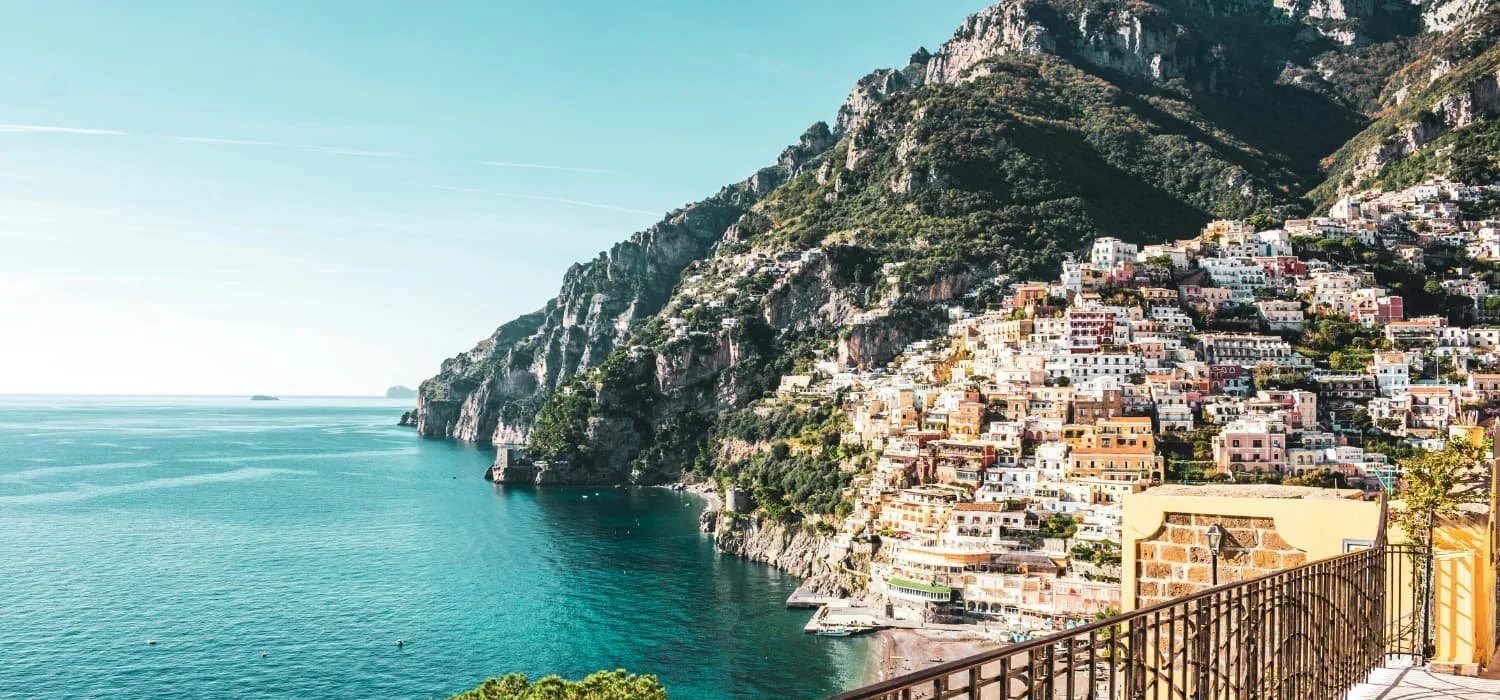
Amalfi Coast, Italy — Where the cliffs end and the real dining begins
The Amalfi Coast Honeymoon Itinerary Built Around the Coast's Real Dining Rooms — Not the Tourist Menus
For couples who want Southern Italy on its own terms.
The Amalfi Coast is one of the most visually extravagant places on earth — and one of the most easily wasted. The difference between an Amalfi Coast honeymoon that genuinely delivers and one that disappointingly doesn't comes down to three decisions made before arrival: where you base yourself, which restaurants you have actually secured, and whether you understand that the coast is not the destination — the region is. Positano is the photograph. The rest is the trip.
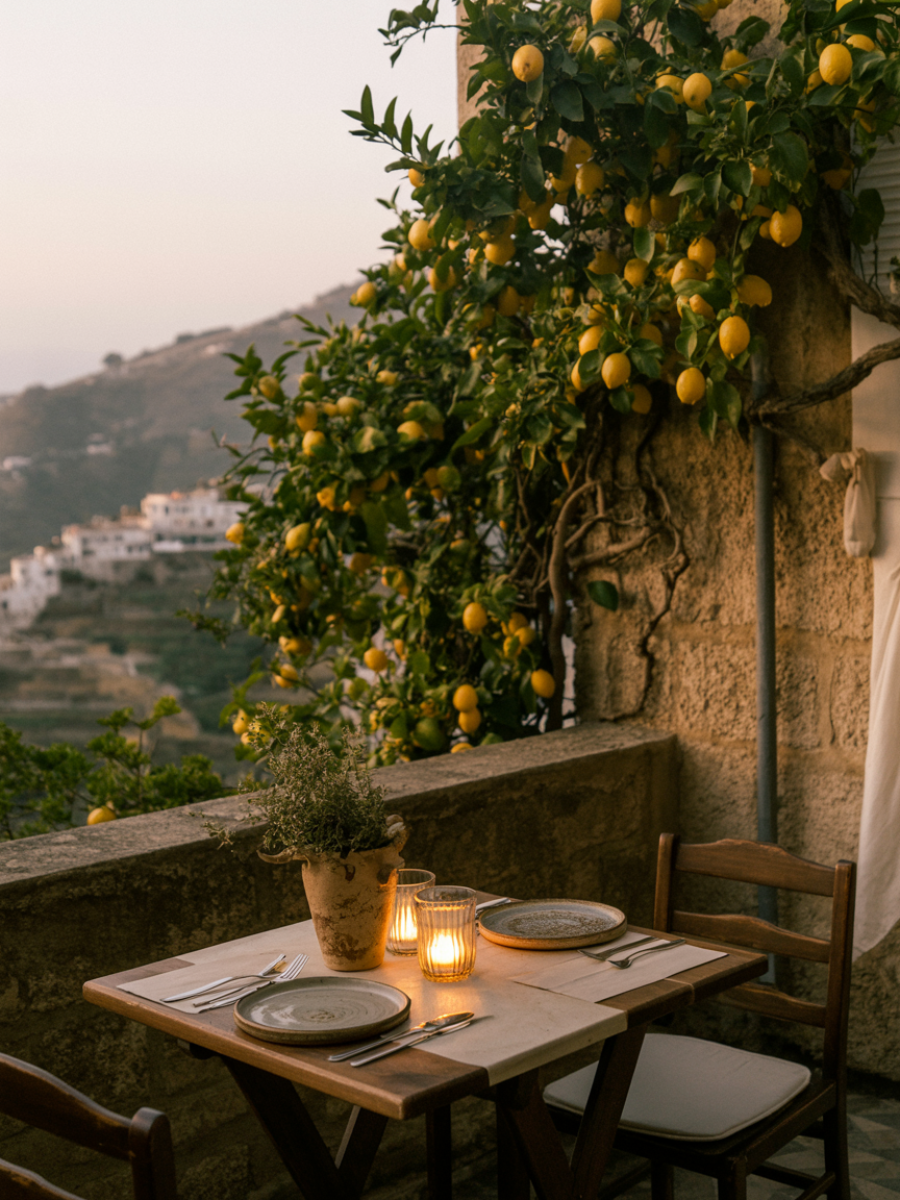 The coast's finest meals are not found in the restaurants with the views — they are up the stone staircase, past the lemon groves.
Positano is the photograph. The rest is the trip.
Our Amalfi Coast itineraries are structured around the coast's actual rhythm. The roads are narrow, the water is for swimming in, and the meals worth remembering happen in villages above the cliffside — not on terraces engineered for Instagram. We know where dining energy concentrates across the calendar, which villages reward the climb, and the precise kitchen timing that separates a meal from an experience you carry home.
For couples flying into Rome or Naples, the Amalfi Coast works as a full destination in its own right — not a rushed day trip from either city. And for those with an extra afternoon, a Capri day trip from Positano is the moment the itinerary has been building toward: not an obligation, not a detour, but the afternoon the coast finally shows you its finest register. For couples entering Italy via the north, a Venice Italy honeymoon pairs naturally as an opening act before the coastal south — the two halves of Italy that reward deliberate sequencing most. And for those building a longer Italian journey, our Tuscany guide provides the interior counterpart this coast was designed to follow.
Destination Intelligence
What we know before you arrive.
May – June.
September – early October.
July and August transform the coast into a different proposition entirely. The SS163 — the narrow cliff road connecting every village — averages under 15km/h on peak summer weekends, and the terrace restaurants operate on tourist turnover rather than culinary intention. May is extraordinary: lemon blossoms, cool sea mornings, and a coast that still feels like it belongs to the people who live on it. September returns all of that with the added warmth of a late-season Tyrrhenian Sea.
Ravello for altitude.
Praiano for honesty.
Positano for the view you've earned.
Where you sleep on the Amalfi Coast determines the trip you have — more so than almost any other destination in Europe. Ravello sits entirely above the coast roads: cooler, quieter, possessed of a cultural seriousness that Positano has never attempted. Praiano is what Positano looked like twenty years ago. We place you according to what the journey is actually for.
The cliffside trattoria. The village above the village.
Positano restaurants worth the reservation.
The coast's finest meals are not found in the restaurants with the views. They are found up the stone staircase, past the lemon groves, in the room where the owner takes your order twice because he doesn't write it down and has no intention of starting. We know which ones accept reservations and which ones require the more valuable currency of simply knowing to show up. Positano restaurants divide sharply between those serving the terrace view and those serving the meal — your guide makes that distinction explicit for every table we recommend. The top restaurants in Positano are not the ones ranking highest on the aggregator sites. They are the ones that still remember what a kitchen is for.
Day trip architecture from Rome, Naples, and Positano.
"Amalfi coast trips from Rome" is among the most searched planning questions in all of Southern Italy — and nearly every answer delivers a bus transfer and a to-do list. Amalfi coast day trips from Naples are equally searched and even less well served. Ours provide a sequenced 4 to 7-day route that uses Rome or Naples as a genuine entry point, builds into the coast with real depth, and incorporates a Capri day trip from Positano — a crossing that 320 couples search for every single month and almost none find proper guidance on executing. The Napoli to Amalfi coast transfer is the first decision that determines the register of the entire trip, and we build that transition into the itinerary rather than leaving it to a booking platform. An Amalfi itinerary of 4 days, properly sequenced, delivers more than a week spent navigating without structure. For the couple who wants the coast at its most considered, an Amalfi coast luxury itinerary treats every village, table, and crossing as a deliberate editorial choice — not a logistical default.
Amalfi Coast — What Couples Ask First
Planning intelligence before you commit.
Four days is the minimum for a genuinely satisfying Amalfi Coast experience — enough time to establish a base, move between two or three villages, and eat at least one meal worth the journey. Seven days is the architecture that allows the coast to reveal itself at its own pace rather than yours.
The mistake most couples make is treating the Amalfi Coast as a day trip from Rome or Naples. Both are possible. Neither delivers the coast you came for. The SS163 cliff road averages under 15km/h on summer weekends. The villages that matter most — Ravello, Praiano, the smaller towns above the tourist waterfront — require time to find their rhythm. Our itineraries are structured from 4 to 7 days, sequenced so that each day builds on the last rather than racing through a checklist.
Each base delivers a fundamentally different trip. Positano gives you the photograph — the layered pastel village, the beach, the view that defines the coast in every travel magazine. It is also the most crowded, the most expensive, and the most oriented toward visitors rather than residents. Ravello sits entirely above the coast road: cooler, quieter, possessed of a cultural seriousness that Positano has never attempted. The views from Villa Cimbrone are among the finest in Europe. Sorrento is the practical choice — easier access from Naples, flatter terrain, and a town with genuine local life alongside the tourism.
Praiano is the answer most couples aren't given. It is what Positano looked like twenty years ago — half the price, a fraction of the foot traffic, and the same Tyrrhenian light on the water at dusk. Our itineraries place you according to what the journey is actually for, not what photographs best.
The honest answer is: it depends entirely on how you approach it. The Amalfi Coast is one of the most visually extravagant places on earth — and one of the most easily wasted. Couples who arrive without a base strategy, without restaurant reservations, and without understanding that July and August transform the coast into a logistical exercise rather than a romantic one often leave disappointed.
The version worth having requires three decisions made before arrival: where you base yourself, which restaurants you have actually secured, and whether you treat the coast as a destination or merely a backdrop. Couples who get those three decisions right consistently say the Amalfi Coast exceeded every expectation. Our itineraries are built around exactly those decisions — the base selection, the dining architecture, and the sequencing that turns the coast into the experience it has the capacity to be.
The standard route is Rome Termini by high-speed train to Naples Centrale (70 minutes), then a transfer to the coast by ferry, private car, or the SITA bus along the SS163. The ferry from Naples to Positano runs seasonally and takes approximately 90 minutes — the most scenic arrival option and worth the logistics if your timing allows. The private car transfer from Naples to the coast takes 60–90 minutes depending on traffic and your destination village.
The decision that matters most is not which transport you use — it is where the transfer ends. Arriving directly into Positano by ferry is a different emotional opening than arriving by car into Sorrento and driving the cliff road. Our itineraries treat the Rome-to-coast transfer as the first editorial decision of the trip, not a logistical footnote — because the Napoli to Amalfi Coast transition sets the register for everything that follows.
May and September are the two months that deliver the Amalfi Coast at its best. May brings lemon blossoms, cool sea mornings, and a coast that still feels like it belongs to the people who live on it. Restaurant tables are available. The cliff road moves. The water is warm enough to swim. September returns all of that — plus a Tyrrhenian Sea at its warmest after a full summer of sun, and the slightly slower energy that comes when the peak crowds have thinned.
Avoid July and August unless the heat and crowds are genuinely acceptable to you. The SS163 averages under 15km/h on peak summer weekends. The terrace restaurants shift into tourist-turnover mode. June and early October are strong secondary options — the shoulder season logic holds firmly on this coast, and the window between late April and mid-June is the one we build most of our honeymoon itineraries around.
The Amalfi Coast spans a wider range than its reputation suggests. The expensive version — Positano hotels with cliff-face infinity pools, terrace restaurants charging for the view — is real and easy to find. But the coast also has agriturismos and family-run pensioni in the villages above the waterfront that deliver genuine character at a fraction of the famous-hotel prices. A meal at the right trattoria in Praiano or Ravello costs less than a mediocre dinner at a Positano tourist terrace.
The cost of an Amalfi Coast honeymoon is largely determined by whether you're paying for the location or the experience. Our itineraries are structured around the experience layer — the tables with the actual food, the villages with the actual life — which means the trip costs less than the postcard version while delivering considerably more. Budget expectations: a well-curated 5-day Amalfi Coast honeymoon runs €3,000–5,000 for two, including accommodation, dining, and transport, depending on how you position the accommodation tier.
Begin Here
Your Amalfi Coast itinerary — from arrival city to final dinner on the cliff.
Tell us whether you're arriving through Rome, Naples, or landing directly on the coast. Tell us how many days you have. We'll handle the rest — the villages, the tables, and the Capri crossing at exactly the right moment.
Start Your Itinerary → See the Experiences →You'll choose Toast, Savor, or Indulge on your intake form.