Provence & the South of France — Slower than the postcard, richer than the itinerary
The Southern France Honeymoon Built Around Provence's Real Rhythm — Not the Lavender Calendar
For couples who want the south of France to feel like it was discovered, not visited.
The South of France honeymoon that most couples describe is the one they found in a photograph — lavender fields at peak bloom, an ochre village glowing in late afternoon light, a table set outside with no one else around. The one we build is the one where all of that actually happens: because the timing was deliberate, the village was not on any tour route, and the table was reserved three months earlier by someone who knew the chef and understood what the kitchen was capable of that week. The photograph and the experience are not the same trip. We are in the business of making them the same trip.
 Provence is agricultural, interior, and profoundly unhurried — its luxury is the quality of its silence.
The photograph and the experience are not the same trip. We are in the business of making them the same trip.
Provence and the Côte d'Azur share a geography and almost nothing else. A Provence honeymoon and a Côte d'Azur stay operate at entirely different registers — and a honeymoon in Provence earns its place as the interior half of this journey precisely because it offers something the coast never can: the quality of genuine stillness. Provence is agricultural, interior, and profoundly unhurried — its luxury is the quality of its silence, the integrity of its markets, and the particular pleasure of a morning with nothing scheduled. The Côte d'Azur is glamorous, coastal, and unapologetically so — its luxury arrives, appropriately, by water taxi. Our South of France honeymoon treats both halves with the specific intelligence each deserves, and resists the impulse to blur them into a single undifferentiated southern experience.
The wine culture of this region is less celebrated than Burgundy and less famous than Bordeaux — which is precisely why it rewards close attention. The rosés of Bandol are serious wines made by serious producers for people who understand the difference. The whites of Châteauneuf-du-Pape are among the most underrated bottles in France. We know the domaines worth visiting, the ones that require appointments to experience properly, and the ones that will open something extraordinary if you arrive knowing the right question to ask.
Destination Intelligence
What we know before you arrive.
Late May – June. September.
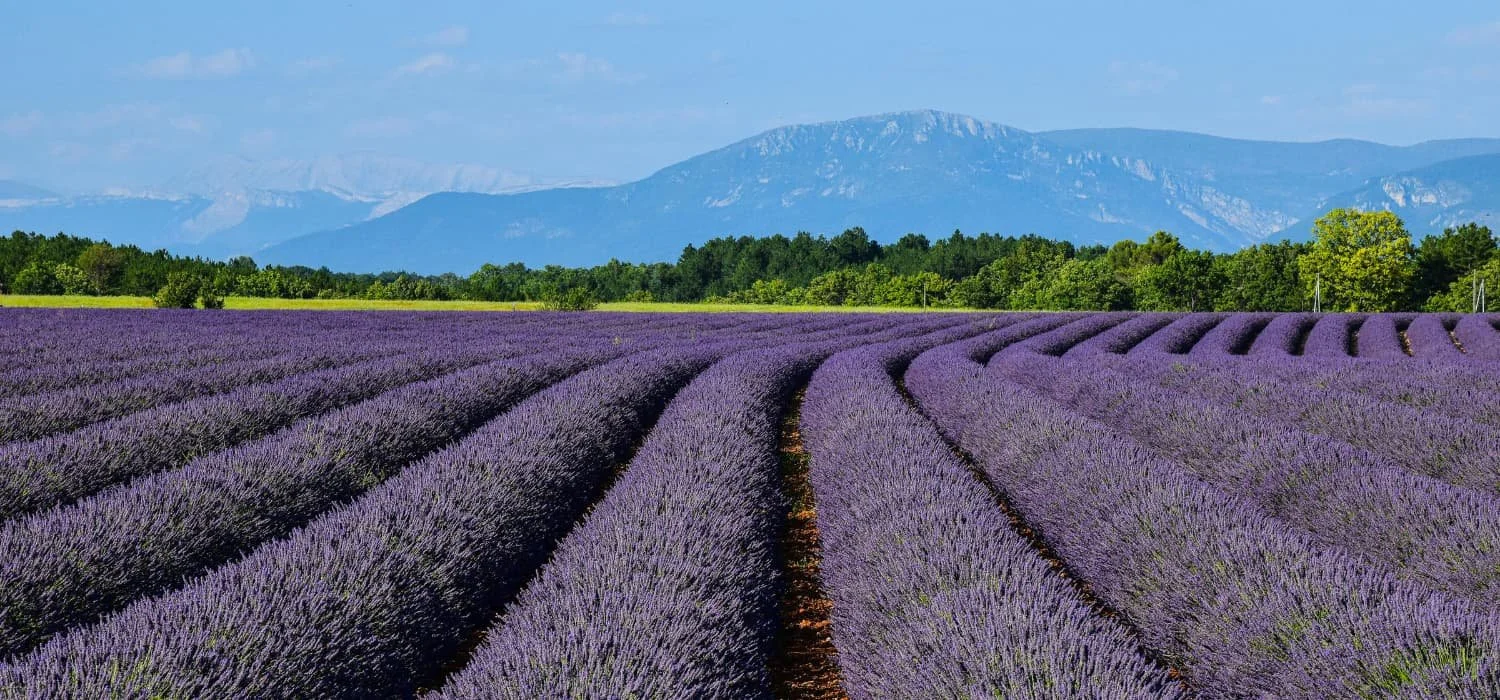
The lavender calendar — the one that fills every search result for "South of France honeymoon" — peaks in late June and the first weeks of July. It is spectacular and it is heavily navigated. Late May gives you the Provence countryside before the season has fully arrived: the fields approaching bloom, the roads still quiet, the restaurants still interested in the meal rather than the turnover. Provence weather in September — warm days, clear light, and a post-harvest stillness — represents the region at its most unhurried and most honestly beautiful. September returns all the quality of spring with the added depth of a sun-warmed landscape and harvest energy in every village market.
A village in the Luberon.
A property east of Cannes.
The Luberon represents Provence at its most cinematically beautiful and most genuinely intimate — Les Baux-de-Provence, Gordes, Ménerbes, each with a distinct character and a reason to choose one over the others. East of Cannes, the Côte d'Azur becomes quieter and more authentically beautiful: Cap Ferrat, Èze, Villefranche-sur-Mer. We deliberately avoid the Cannes-to-Monaco stretch for honeymoon stays. It is the most photographed section of coastline in France and among the least restful.
The market morning. The Bandol question.
The restaurant that doesn't take walk-ins.
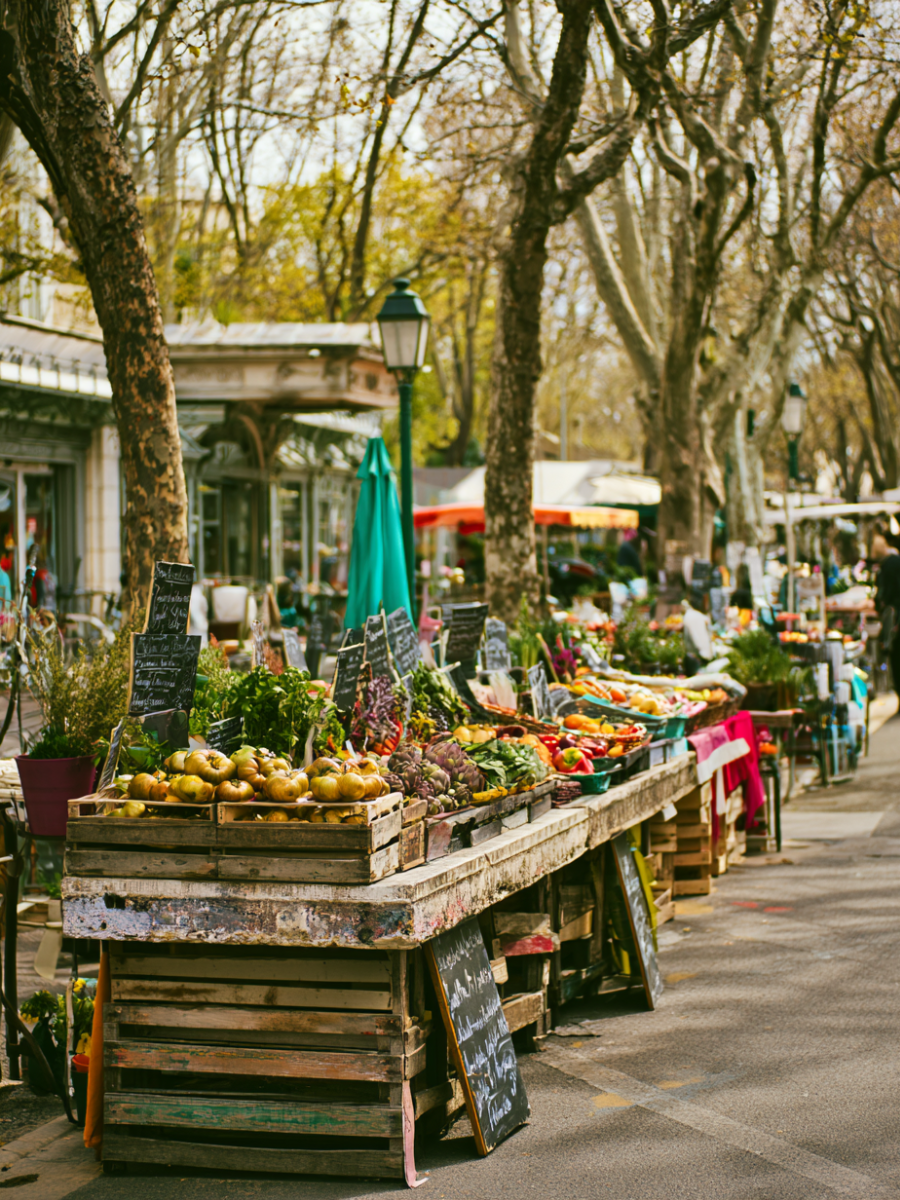
A Provençal market requires no curation — arrive before eight, bring nothing, leave with everything. The restaurants surrounding those markets require a great deal of it. We know which kitchens have built their entire philosophy around what the market produced that morning and which ones have simply positioned themselves nearby. The difference is on the plate within the first course. The rosé question, incidentally, is not which to order — it is which producer, from which appellation, and whether Bandol or Palette better suits the evening you are building.
The two-region architecture that most South of France itineraries collapse.
"South of France honeymoon" draws over 480 searches every month — and nearly every result treats Provence and the Côte d'Azur as a single, interchangeable southern experience. Our itineraries treat them as two distinct emotional registers within one journey: interior and coastal, slow and glamorous, the village and the sea. The transition between them is not a logistical detail. It is the moment the trip shifts — and we design it with the same care as every table we recommend.
South of France — What Couples Ask First
Planning intelligence before you commit.
Seven to ten days is the architecture that allows both halves of a South of France honeymoon to deliver fully — Provence and the Côte d'Azur are two distinct emotional registers, and collapsing them into a shorter trip means sacrificing one for the other. Five days can work if the trip is anchored in a single region rather than attempting both. Ten days allows three nights in a Luberon village, two nights on the Côte d'Azur, a market morning, a Bandol wine day, and enough unscheduled time for the South of France to do what it does best: make the days feel longer than they are.
The error most couples make is treating the South of France as a single destination. Provence and the Côte d'Azur share a geography and almost nothing else. A honeymoon that attempts to cover both in five days ends up with a surface experience of each. Seven days minimum; ten days if the culinary dimension of Provence — the markets, the producers, the restaurants that require advance reservation — is central to what you came for.
Late May and September are the two months that deliver the South of France at its best. Late May gives you the Provence countryside before the season has fully arrived: the fields approaching bloom, the roads quiet, the restaurants still interested in the meal rather than the turnover. The lavender peaks in late June and early July — spectacular, heavily navigated, and worth accounting for in your sequencing rather than avoiding entirely.
September is the finest month in Provence — warm days, clear light, and a post-harvest stillness that represents the region at its most unhurried and most honestly beautiful. The Côte d'Azur in September has lost the peak summer crowds while retaining the warm Mediterranean water. The window from mid-September through mid-October is when the quality-to-crowd ratio of the entire region is at its best. Avoid August on the coast entirely unless you are specifically seeking the scene that comes with it.
The two regions reward entirely different kinds of couples, and the right answer depends on what the honeymoon is actually for. Provence — specifically the Luberon, with villages like Gordes, Ménerbes, and Les Baux-de-Provence — is for couples who want mornings at the market, afternoons doing nothing, and evenings at a table that required three months' notice. It is agricultural, interior, and profoundly unhurried. The luxury is the quality of the silence.
The Côte d'Azur east of Cannes — Cap Ferrat, Èze, Villefranche-sur-Mer — is for couples who want glamour, coast, and the unapologetic pleasure of arriving somewhere beautiful by boat. We deliberately avoid the Cannes-to-Monaco stretch for honeymoon stays. It is the most photographed section of coastline in France and among the least restful. The best South of France honeymoon itinerary uses both: Provence first, coast second — interior giving way to water, stillness giving way to glamour, the sequence making each half stronger than it would be alone.
The South of France spans a wide range. A well-positioned mas or bastide in the Luberon runs €200–400 per night at a genuine property during shoulder season. A boutique hotel on the Côte d'Azur east of Cannes runs €250–500. The restaurant costs are where the range opens up most significantly — a serious Provençal kitchen with a three-month waitlist charges €120–180 per person with wine; an excellent village bistro charges €60–80 and often delivers something more honest.
The cost trap in the South of France is the famous-name property on the Côte d'Azur that charges peak rates for a view that half the hillside shares. Our itineraries avoid that layer almost entirely — not because the famous properties are bad, but because equally extraordinary experiences exist at better value one village east or one property less celebrated. A South of France honeymoon that identifies those properties — the mas that looks like a hotel, the restaurant the maison's chef actually goes to on his day off — costs meaningfully less than the postcard version while delivering considerably more.
Lavender in full bloom peaks between late June and the second week of July, with the precise timing varying by altitude and location — the higher plateaus around Valensole and the Luberon tend to peak slightly later than the lower fields. The bloom is genuinely spectacular and worth planning around if lavender is the primary visual objective of the trip. What the photographs don't communicate is that this window coincides precisely with the region's peak tourist season.
Our recommendation for most honeymoon couples is to target late May or late June — catching either the approach to peak bloom or its very beginning — rather than the peak itself. The fields approaching full bloom in late May carry their own quality: the colour is building, the roads are not yet congested, and the restaurant tables that are impossible in July are available in May. If peak lavender bloom is non-negotiable, plan the Provence portion of the trip for the last week of June and build in the understanding that the most famous lavender fields near Valensole will be navigated by everyone with the same idea.
Yes — this is one of the most natural and rewarding honeymoon combinations in France, and the logistics are straightforward. Paris first, South of France second is the sequence we recommend for most couples: begin in the city's energy and intellectual richness, then transition to the warmth, markets, and unhurried pace of Provence for the second half. The TGV from Paris to Avignon takes three hours and is itself part of the experience — the landscape shifting from the Paris basin to the Mediterranean south over a single journey.
The two halves of France operate at entirely different registers, and that contrast is what makes the combination work. Paris is urban, late-evening, and built around restaurants that begin at 8:30pm. Provence is agricultural, early-morning, and built around markets that close by noon. A honeymooner who experiences both in sequence comes away with a version of France that is genuinely complete — not just the city, not just the countryside, but the full range of what French culture delivers when it is operating at its best.
Begin Here
Your South of France honeymoon starts with one question — Provence first, or the coast?
Tell us where you want to arrive and where you want the trip to end. Tell us whether this is about stillness, glamour, wine, or all three in the right order. We'll handle the sequence, the villages, and the rosé list.
Start Your Itinerary → See the Experiences →You'll choose Toast, Savor, or Indulge on your intake form.