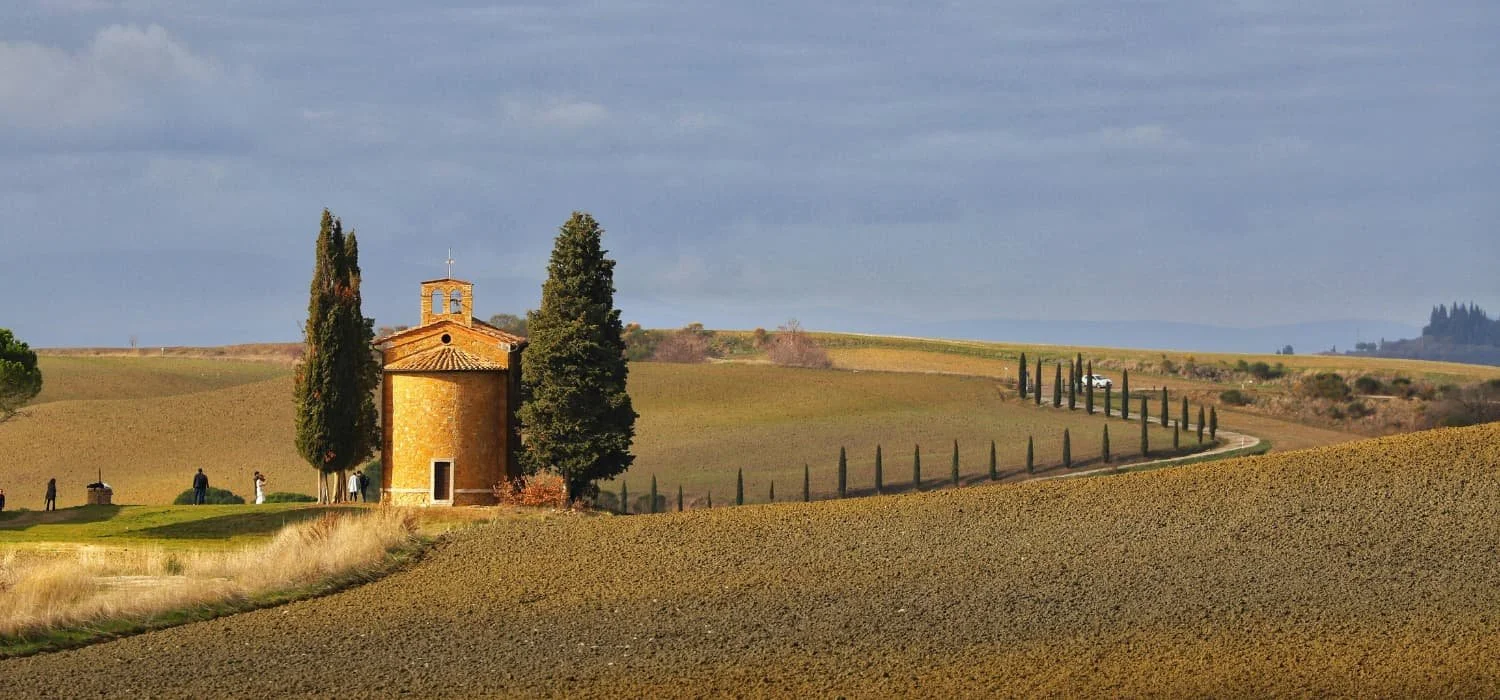
Tuscany & Piedmont, Italy — Where the vine and the table are the same conversation
The Italy Honeymoon Itinerary Built for Couples Who Want More Than the Obvious
For couples who want to disappear into beauty — and come back changed by a meal.
Florence and the Tuscan countryside are where an Italy honeymoon itinerary earns its reputation — and the place where most fall short of their potential. Nowhere else does Renaissance art and world-class wine culture converge not as separate attractions — but as a single, continuous experience. Mornings in frescoed chapels. Afternoons lingering over Brunello. An evening in a Montalcino trattoria where the host opens a bottle an hour early because he has decided, for reasons entirely his own, that you deserve it.
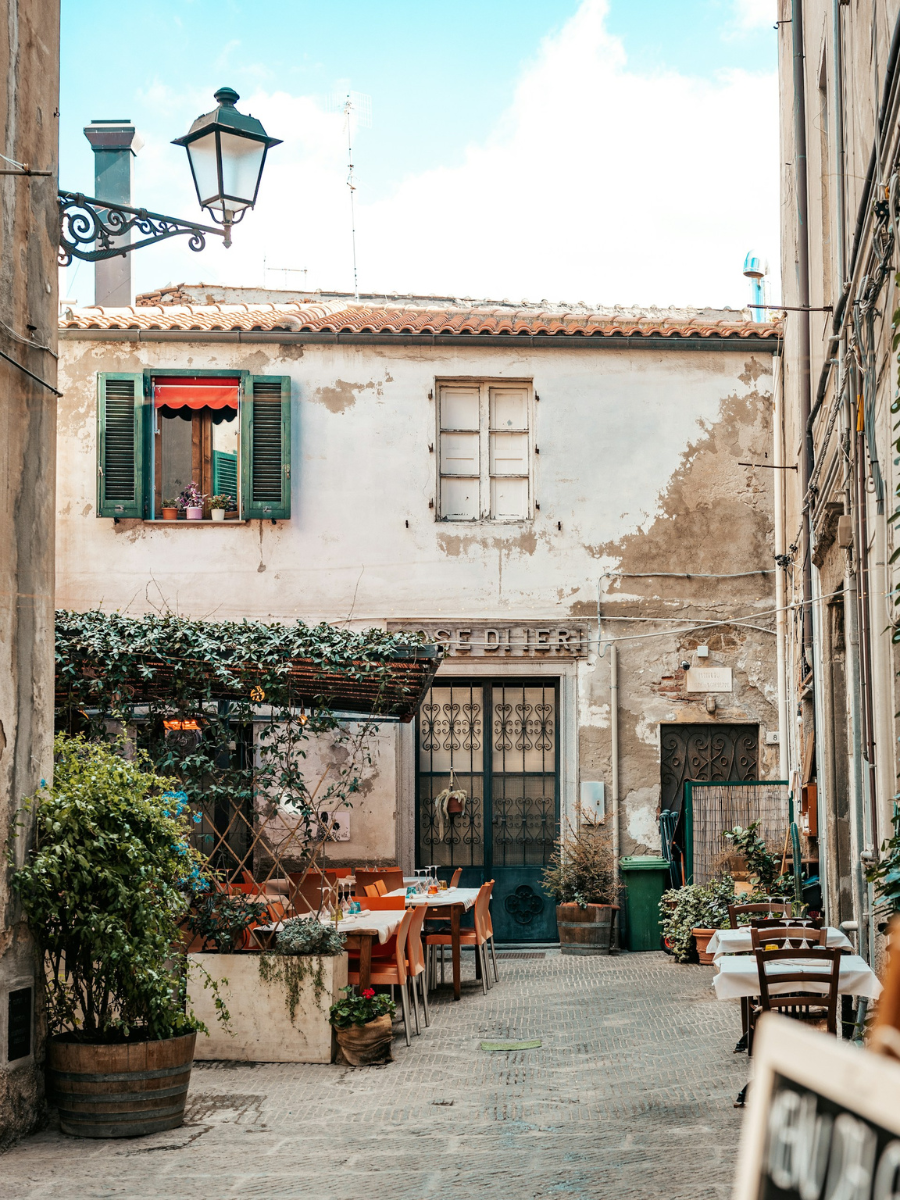 The host who opens a bottle an hour early because he has decided, for reasons entirely his own, that you deserve it.
Nowhere else does Renaissance art and world-class wine culture converge not as separate attractions — but as a single, continuous experience.
What sets a Tuscany honeymoon apart is its duality — the urban sophistication of Florence and the agrarian romance of the Chianti countryside, and the rare quality that both halves deliver beauty at exactly the same register. Most couples choose one. Our Italy honeymoon itineraries are built around both, sequenced so that neither half feels like a compromise or a detour from the other.
North in Piedmont, the Barolo wine country operates at a different frequency entirely — quieter, older, and far less discovered than its reputation suggests. We evaluated 33 wine estates across the Langhe hills. The ones in your guide are the ones that feel like a privilege to visit rather than a transaction to complete — and the ones that don't appear on anyone else's list. A Barolo wine tour from the cellars around Alba — where the food and wine pairing is inseparable from the experience — is the Piedmont that rewards the couple who planned further ahead than everyone else. For those routing through Milan, a Lake Como honeymoon extension adds a northern counterpoint before the Barolo country begins. Couples arriving via the Ligurian coast can incorporate a Cinque Terre itinerary as a scenic prelude before the Tuscan interior takes over. And for the Italy honeymoon Amalfi Coast pairing, our guides treat both as equal principals — not a main trip with a coastal add-on — with sequencing built around arrival energy and departure feeling.
Destination Intelligence
What we know before you arrive.
Late April – June.
Mid-September – October.
Two windows define the Tuscany worth experiencing. The golden window — late April through early June — brings wildflowers on the roadsides and valleys that haven't yet remembered they're famous. The harvest window is truffle season, wine harvest, and rare Cantine Aperte cellar access that rewards those who plan months in advance. Avoid July and August entirely: Florence becomes a different city, and most of its finest restaurants close for Ferragosto.
Vineyard estates.
Oltrarno boutiques.
Agriturismos.
The most consequential decision of a Tuscany honeymoon is not which city to visit — it is where to sleep. Basing yourself in Florence and day-tripping to Chianti forfeits the countryside's essential rhythm entirely. Our Italy itineraries are structured around the countryside first — Florence earns its nights through proximity and intention, not default convenience.
The enoteca scene.
The late dining rhythm.
The Tuscany wine trip built around the right producers.
Tuscany's dining culture runs on a specific code. Reservations before 8pm are a tourist signal; the real energy arrives at the table around 9:30pm. Chianti Classico, Brunello, and the Super Tuscans are not interchangeable — your guide identifies the specific Barolo producers whose cellars account for over 33,000 monthly searches and require an introduction before you arrive. A Tuscany wine trip built around food and wine tours of Tuscany — not the commercial routes, but the producers who still make the call themselves — is what separates a fine holiday from a journey that changes how you think about wine.
Appointment-only cellars.
Truffle hunts that aren't performances.
The Barolo cellars and Chianti estates in your guide are not on any commercial tour route. They require a relationship to access — which is precisely why they remain worth accessing. The truffle hunters we recommend are not performing for visitors. They have simply agreed, through years of cultivated trust, to let you come along. This is the difference The Itinerary Architect was built to deliver.
Tuscany — What Couples Ask First
Planning intelligence before you commit.
Seven days is the minimum to experience Tuscany as two distinct worlds — Florence and the countryside — without either feeling rushed. Ten days is the architecture that allows you to add Piedmont and the Barolo wine country to the north, which transforms a good Italy trip into one that covers both the Tuscan soul and its quieter, older northern counterpart.
The error most couples make is underestimating the countryside. Florence requires two full days at minimum. Chianti and the Montalcino area deserve at least three nights if you want the rhythm of the place rather than a series of day trips. Our 7-day and 10-day Italy honeymoon itineraries are structured around these proportions — not the other way around.
Florence (FLR) is the correct answer for most couples — it puts you in the city on day one and the countryside is less than an hour by car. Pisa (PSA) is the common alternative and works well if your itinerary begins along the western Tuscan coast or Cinque Terre before moving east.
Rome (FCO) is worth considering if you're building a longer Southern Italy journey — arriving in Rome, spending two to three days there, then moving north into Tuscany by train is a logical and satisfying sequence. Milan (MXP) is the right arrival point if your itinerary routes through Piedmont and the Barolo wine country first, then south into Tuscany.
The Val d'Orcia in late spring — the rolling hills south of Siena, the cypress-lined roads near Montalcino, the light at 6pm in early June when the whole landscape carries a quality that the word beautiful doesn't quite reach. Chianti Classico runs a close second for its vineyard density and the intimacy of its villages — Radda, Panzano, Greve — where the culinary scene is serious without the self-consciousness of more celebrated destinations.
Florence is not the most beautiful part of Tuscany. It is the most important. Those are different things, and understanding the difference is where good itinerary architecture begins.
A car is essential for the countryside and the only sensible way to experience the Chianti wine estates, Montalcino, the Val d'Orcia, and the Barolo wine country in Piedmont. The drive from Florence into the Chianti hills — taking the SR222 rather than the autostrada — is itself part of the experience.
Within Florence, no car is needed and a car is actively a liability. The ZTL restricted traffic zone covers the historic center, and fines for entering without authorization are automatic and significant. Our itineraries are structured so that Florence days are pedestrian and countryside days are by car — the only logical architecture for how this region actually works.
April is one of the two best months. The landscape is at its most alive — wildflowers on the roadsides, vineyards just coming into bud, and the valleys carrying none of the summer's heat or crowds. Restaurant bookings that are impossible in June are available in April. Agriturismo rates run 20–30% lower than peak season.
The trade-off is weather variance. April in Tuscany can produce three consecutive days of cold rain — not a crisis, but worth building into expectations. Late April is significantly more reliable than early April, and combined with the first week of May, represents the single best window for a Tuscany honeymoon if the goal is beauty, access, and culinary quality simultaneously.
Tuscany spans a wider range than most European destinations. A well-positioned agriturismo in Chianti costs less than a mid-range hotel in Paris. A Michelin-recognized dinner for two with wine in Montalcino runs €120–180 — a fraction of what the equivalent experience costs in London or New York.
Where Tuscany becomes expensive is the tourist-facing layer of it. Central Florence hotels, commercial wine tours, and the restaurants that list their Wi-Fi password on the menu price themselves at peak demand. The countryside layer — the producers who don't advertise, the trattorias the locals actually use — represents some of the most genuine and accessible luxury in Europe. Our itineraries are built around the second category entirely.
Begin Here
Your Tuscany & Piedmont itinerary begins with a single conversation.
Tell us when you're going, what matters to you, and how you want the trip to feel. We handle everything from the Barolo cellar introductions to the Florentine trattoria that requires knowing someone — and the pacing that makes both feel inevitable rather than planned.
Start Your Itinerary → See the Experiences →You'll choose Toast, Savor, or Indulge on your intake form.