Beyond Paris: The One Day Trip That Completes a Paris Itinerary
On why the smartest week in Paris ends with forty-five minutes going somewhere else entirely.
Ask ten people planning a week in Paris what they're doing on day six, and nine will say 'more Paris.' That's the mistake. The best day trips from Paris exist because the city, for all its excess, is built on refusal — it will not give you rolling chalk hillsides, a producer pouring you the wine he made from vines outside his kitchen window, or the particular quiet of a village that empties out by four in the afternoon. Paris gives you density: museums stacked on markets stacked on bistros, a week that never runs out of things to book. What it withholds is space — the kind that lets a trip breathe before it ends. A week built entirely inside the périphérique starts to compress on itself by day five. One day out changes the shape of everything that follows, including the days back in the city.
Paris gives you density: museums stacked on markets stacked on bistros, a week that never runs out of things to book. What it withholds is space — the kind that lets a trip breathe before it ends.
Paris Is the Setup, Not the Whole Story
Paris rewards structure. Book it right — a week, arriving with two days to surrender to jet lag and closing bistros, three days split between the Rive Gauche's slow mornings and the Marais's sharper evenings — and the city gives you everything density promises: an afternoon at the Musée d'Orsay followed by oysters at the counter of Huîtrerie Régis, a Sunday market at Marché d'Aligre trailed by a two-hour lunch that runs long on purpose. What Paris does not give you, no matter how many days you add, is scale change. Every neighborhood, however different in character, sits inside the same rhythm — the same density of choice, the same low hum of a city that never fully quiets. By day five or six, that rhythm starts to read as noise rather than energy. This is where the best day trips from Paris earn their place in the itinerary, not as a concession to boredom but as architecture. The right one-day departure resets the register entirely: fewer decisions, wider light, a different relationship to time. It's the difference between a trip that ends on a plateau and one that ends on an ascent. For couples building a week-long Paris stay with one day held open, we treat that day as a hinge — not an add-on, but the moment the whole itinerary pivots from urban immersion to something quieter and more particular. Our Paris & Champagne destination guide walks through exactly how we sequence that hinge day inside a full week, but the short version is this: choose the extension for what it gives you that Paris structurally cannot, not for proximity or name recognition alone.
Champagne, and Why the Alternatives Lose
The Forty-Five Minute Reset
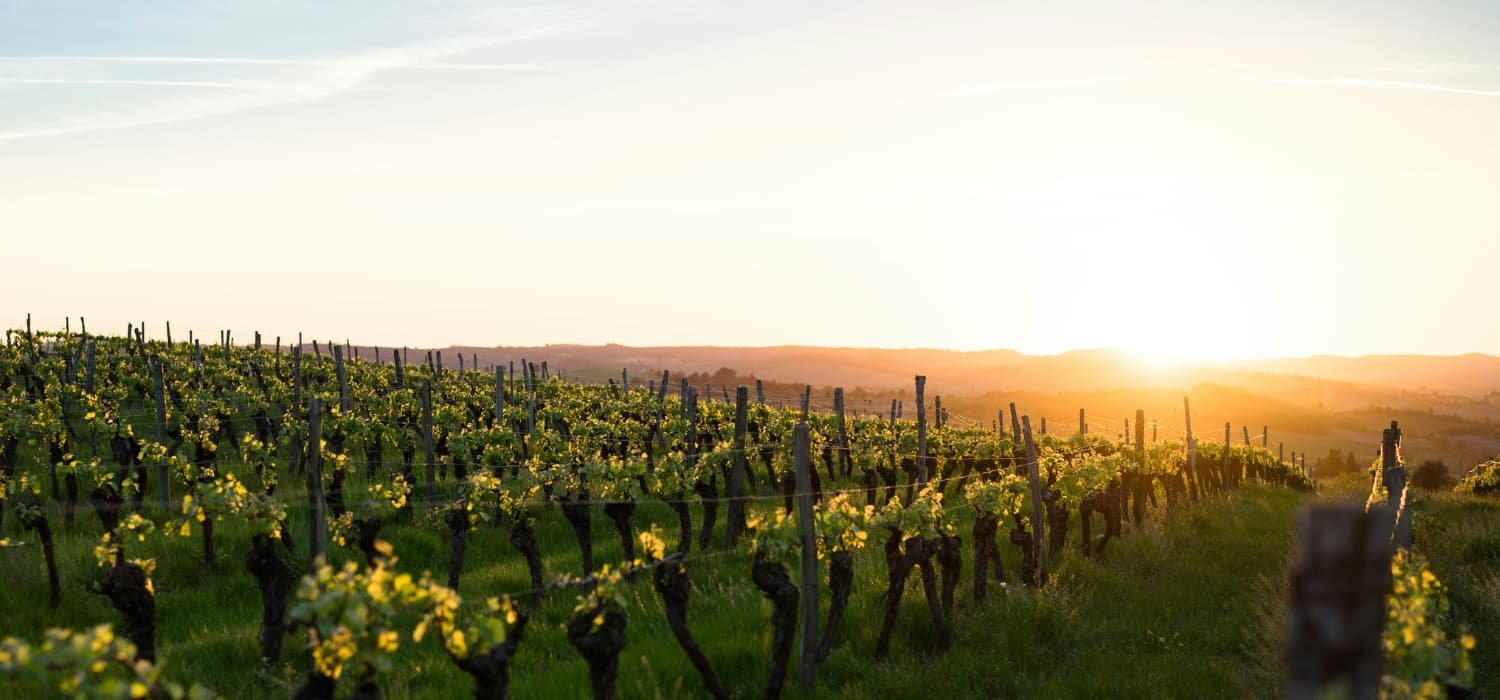
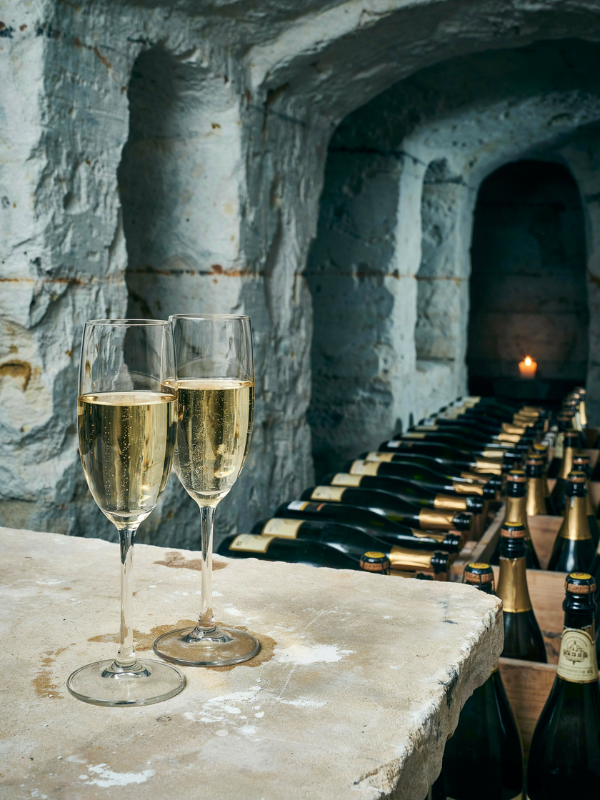
Champagne wins because it does what Paris cannot: it slows your metabolism down without asking you to sacrifice ambition. The train from Gare de l'Est to Reims or Épernay takes under an hour, which means a Paris champagne day tour doesn't eat your week — you leave after breakfast and you're standing in a chalk cellar by mid-morning. Reims gives you Maison Ruinart's crayères, carved by Romans and still holding a constant 12 degrees three stories underground; Épernay gives you the Avenue de Champagne, where Moët, Perrier-Jouët, and a half-dozen grower houses sit within walking distance of each other, which matters when your afternoon involves several glasses and no interest in driving. But the house tours are not the point — the point is the twenty minutes you spend standing in a vineyard outside Aÿ or Verzenay while a fourth-generation grower explains, without being asked, why his hillside faces the way it does. That's a register Paris cannot manufacture at any price point. Pair the cellar visit with lunch at Le Jardin Les Crayères in Reims or a baguette-and-cheese picnic on the Avenue de Champagne steps — either beats the rushed brasserie lunch you'd otherwise grab between Paris museums. Book maison access at least three weeks out; the small grower houses take four visitors at a time and fill fast in shoulder season. Go for the day if the week is tight, but if you can hold one night in Reims or Épernay, take it — the light over the vines at seven in the evening, after the tour buses have gone, is the whole reason to leave the city in the first place.
Pacing: Day trip works on a tight week; if your Paris stay runs seven nights or more, give Champagne one overnight in Reims or Épernay and thank yourself later.
Versailles: Why We Skip It
Versailles is the default answer, and it's the wrong one for this kind of trip. You'll spend two hours in security and ticket lines, another hour walking marble hallways shoulder to shoulder with tour groups, and you'll leave having seen a monument to excess rather than experienced anything that changes how the rest of your Paris week feels. It's a museum day wearing a countryside costume — the gardens are real, but the scale and the crowds put you right back in the density Paris already gave you, just with worse food options. If grandeur is the goal, Paris itself has better versions inside city limits.
Pacing: If you've never seen it, a half-day works — but don't sacrifice your one open day to it.
Loire Valley & Normandy: The Distance Problem
Both regions are real trips, not day trips, and treating them as the latter is the most common way couples burn a full day on a train instead of on the ground. The Loire's châteaux sit ninety minutes to two hours out depending on which you choose, and Normandy's coast and D-Day sites run closer to three. Either deserves its own two- or three-night stay, ideally on a separate visit to France rather than bolted onto a Paris week that's already carrying a full itinerary. Forcing either into a single day means four to six hours on trains and a handful of rushed hours on-site — a bad trade against Champagne's forty-five minutes each way.
Pacing: Skip for this trip; save for a dedicated Loire or Normandy stay of two nights minimum.
How to Build the Day (or Night) In
For a standard week in Paris, we build the Champagne extension one of two ways, depending on pacing preference. The day-trip structure: 6 nights Paris + 1 day trip to Champagne, positioned on day 5 or 6 — never day 1 or 2, when jet lag will flatten the experience, and never the final day, when you want a soft landing back in Paris rather than a train transfer straight to the airport. Take the 8:15 or 9:00 train from Gare de l'Est, book one maison tour and one grower visit, and return by the 6:40 or 7:30 evening train in time for a late Paris dinner. The overnight structure: 5 nights Paris + 1 night Reims or Épernay + return to Paris for a final night before departure. This adds breathing room — an evening and a full morning in Champagne instead of a compressed afternoon — and it's the version we recommend for a first-time visit or an anniversary trip, where the pace matters as much as the itinerary. The most common mistake we see: couples book Versailles and Champagne in the same week, treating them as comparable half-day options, and end up giving neither the time it deserves. Pick one. If the goal is a genuine reset from Paris's density, Champagne earns the day; Versailles, however famous, does not change your relationship to the trip the way a chalk cellar and a vineyard at golden hour will. Sequence the Champagne day so it sits after your most Paris-dense stretch — post-Louvre, post-Marais — so the contrast registers. A day trip inserted too early just feels like an errand; placed at the right point in the week, it feels like the exhale the whole trip has been building toward.
What to Know Before You Go
For a culinary-minded couple, Champagne outranks Versailles and the Loire for a single open day. The travel is under an hour each way, the experience shifts from monument-viewing to hands-on tasting, and you can structure the day around a maison tour, a grower visit, and a proper lunch rather than a rushed circuit through crowded halls. It delivers a genuine change of pace without costing you a full day of your Paris week.
A well-built Paris champagne day tour starts with an early train from Gare de l'Est to Reims or Épernay, one pre-booked maison tour in a chalk cellar, a grower visit for a more personal tasting, and a proper lunch before the return train. Done right, it takes under twelve hours door to door, including roughly ninety minutes round trip on the train, and leaves you back in Paris in time for dinner.
Book maison tours at least three to four weeks ahead, longer in peak season (May through September), since small grower houses often cap visits at four to six people. Trains from Gare de l'Est to Reims run just under an hour and require no reservation beyond a standard ticket, but reserve your specific departure time once maison bookings are confirmed so the day's timing actually lines up.
The Sequencing Is the Service
The sequencing above is the logic behind every Paris week we build: know what the city gives you, know what it withholds, and place the extension where it will actually register. Whether you're working with Toast for a streamlined framework, Savor for a fully mapped week, or Indulge for a bespoke Paris-and-Champagne build down to maison reservations, we start from the same Paris & Champagne destination guide principles. Let us build the week that ends on an ascent, not a plateau.
Start Your Itinerary See the Experiences →You'll choose Toast, Savor, or Indulge on your intake form.