Culinary Intelligence
Douro Valley Wine Tour: How to Sleep Inside the Landscape
The Douro does not reward the day trip. It rewards the couple who stays long enough to watch the light move.
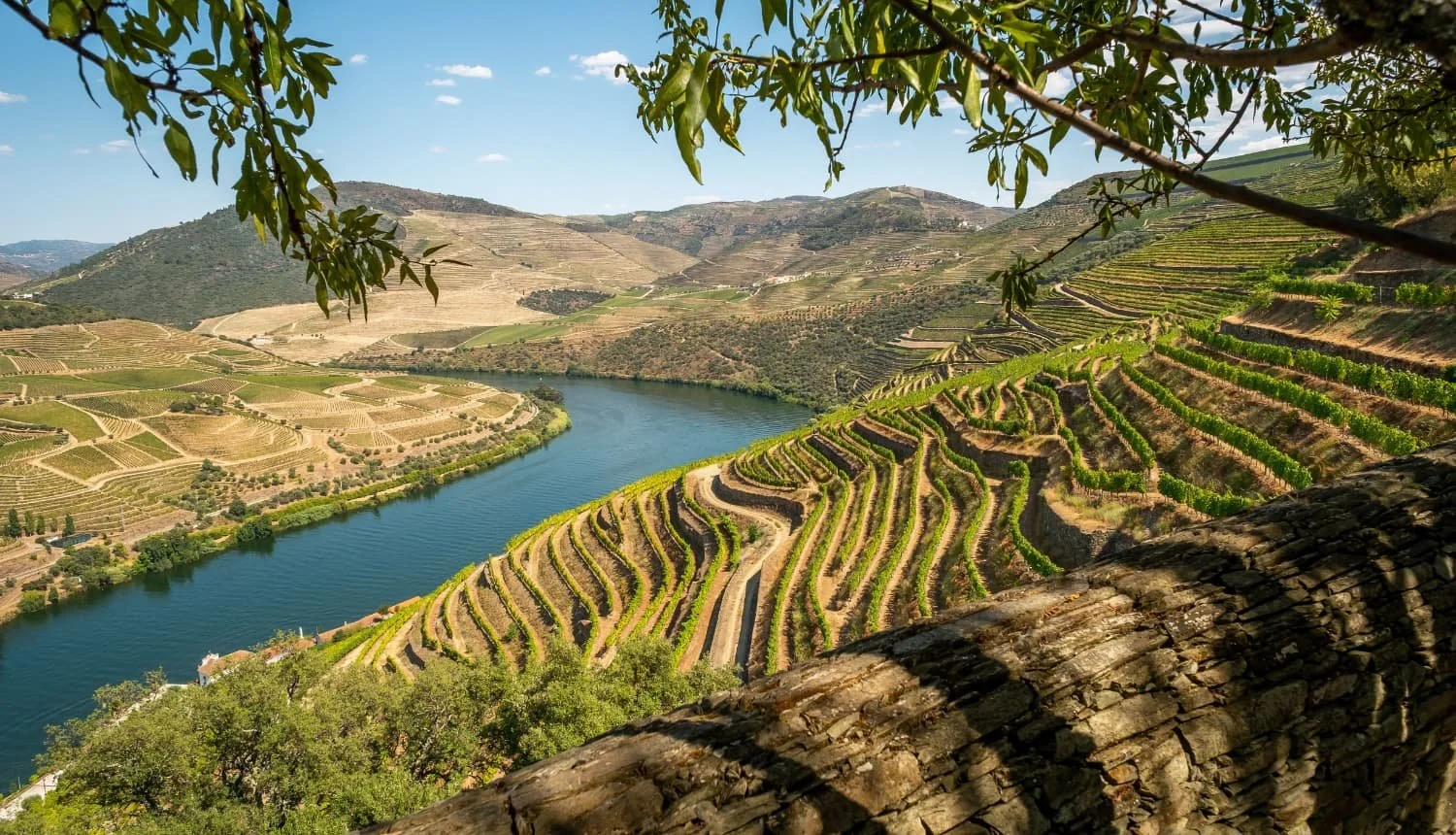
Most people meet the Douro from the deck of a boat, which is a little like meeting a cathedral from the parking lot. A Douro valley wine tour built well begins the other way around — you check into a quinta on the terraces themselves, and the valley stops being scenery and becomes the room you wake up in. This is a landscape people cut by hand: schist ledges stacked up a thousand feet of hillside, walls laid dry, vines rooting through rock because there is nothing else to root through. The wine follows from the geology, the food follows from the wine, and the pacing of your days should follow from both. Come in late September and you will hear the harvest before you see it — trucks grinding the switchbacks, singing out of the lagares after dark. Come in May and the river runs green and the terraces are still soft. Either way, you should sleep inside it rather than visit it.
A Douro valley wine tour built well begins the other way around — you check into a quinta on the terraces themselves, and the valley stops being scenery and becomes the room you wake up in.
1. Why the valley itself is the accommodation.
The argument for the Douro is not that it makes good wine. The argument is compression. Nowhere else in Europe does a demarcated region stack itself this vertically, this narrowly, this close to the water — from a terrace above Pinhão you can see four working estates across the river and very nearly count the rows on all of them. That geography changes what a Douro valley wine tour is. It stops being a circuit of appointments strung between a hotel in a city and vineyards an hour away, and becomes a series of short, deliberate movements between houses that are also farms.
Which is why we move couples out of Porto. Porto earns two nights — the Gaia lodges, a long dinner at Antiqvvm, a pernil sandwich eaten standing up at Casa Guedes — but a day trip from there buys you two hours on the terraces and four in the car on the N222. Sleep in the valley instead and that same road becomes a pre-dinner detour rather than the day itself.
Our Portugal destination guide maps how the Douro connects to Lisbon, the Alentejo and the northern coast. If you are building something longer, this is the section that most repays extra nights, because its pleasures are slow, table-bound and entirely dependent on light. The terraces at seven in the evening are not the same place they were at noon.
2. Four quintas, and what each one is for.
Quinta do Crasto
Gouvinhas, Cima Corgo
The old blocks here — Vinha Maria Teresa, Vinha da Ponte — went in before anyone in the valley bothered to separate the varieties, and they are still picked and fermented as the tangle they are. Come for the vineyard walk, not the tasting room. The pool that hangs off the ridge above the river is the most photographed rectangle in the Douro, and it has earned that. Visits by appointment; no rooms.
Quinta Nova de Nossa Senhora do Carmo
Covas do Douro, above Pinhão
Ten minutes up from Pinhão. The Winery House keeps fewer than twenty rooms, a kitchen that cooks out of the estate garden, and marked trails running through the vines to a river viewpoint you will have entirely to yourself before breakfast. This is the one to book first, because it is the one that sells out first. The Grande Reserva reds travel; the whites are quietly underrated.
Quinta do Vale Meão
Vila Nova de Foz Côa, Douro Superior
Far east, where the valley widens and the heat arrives in earnest. This is the property that grew the fruit for the first Barca Velha in 1952, and the Olazabal family farms it still. The drive out is ninety minutes and it is the day you will describe to people back home. Taste the Meandro beside the Vale Meão; the old-vine concentration explains itself without commentary.
Quinta de Ventozelo
Ervedosa do Douro, São João da Pesqueira
A working estate of some four hundred hectares converted into a hotel without being smoothed over — schist buildings, a village-scaled layout, a kitchen turning out posta and cabrito. Stay here if you want the valley with nothing standing between you and it. The plantings are old and mixed; ask to walk the high blocks at dusk, when the river below goes the color of a tawny.
3. What is actually in your glass.
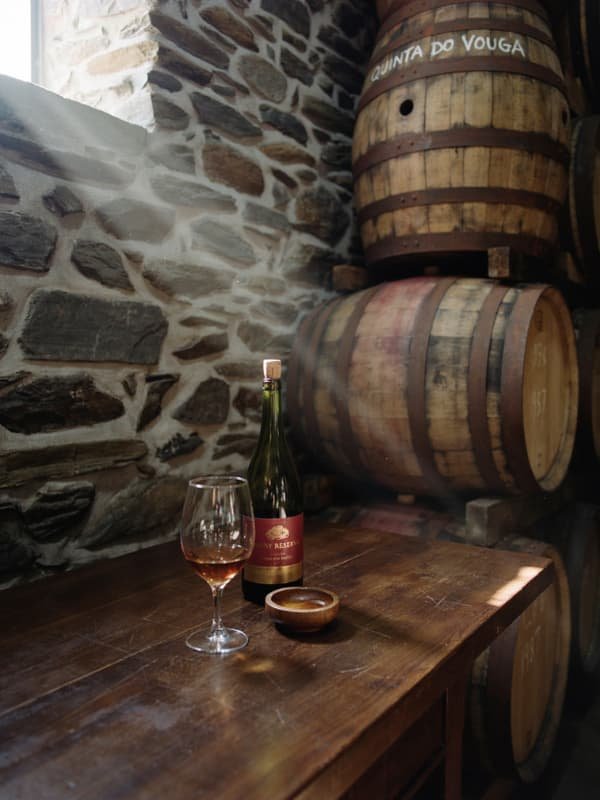
Almost everything you drink here is a field blend by inheritance. The old plots above Pinhão were planted before anyone in the valley cared which vine was which — thirty-odd varieties tangled through a single parcel, picked together, fermented together, and still bottled that way at Crasto and Noval. The named grapes came later: Touriga Nacional for structure and violets, Touriga Franca for perfume and lift, Tinta Roriz (Tempranillo, in its Spanish life) for flesh, Tinta Barroca for early sugar, Tinto Cão for spine.
The other thing to understand is the letters. Every vineyard in the demarcated region is scored A through F on soil, altitude, aspect, slope and vine age, and that score governs how much port the property may declare each year. A parcel low on the river, on schist, facing south is a different asset from a granite block up near the ridge — and the serious producers use the gap deliberately: port off the best terraces, dry red off the cooler high ground.
That is why the Douro has become the stretch of a Portugal honeymoon itinerary couples talk about afterwards. You can taste a twenty-year tawny at eleven, a 2017 dry red at three, and understand over dinner that both came off the same hill. Serve the tawny cold. Drink white port with tonic and a strip of lemon peel before dinner, the way the valley does. Our Portugal destination guide tracks which estates are open to visitors season by season.
4. How to build the days.
The mistake we see most: couples treat the Douro like Napa and book three tastings a day. Distances look small and drive like Wales. The N222 is slow by design, and the last thirty minutes of any day here belong on a terrace with a glass, not behind a windshield. Two visits a day, maximum — one before lunch, one at four.
Structure it 2+3. Two nights Porto at the front, three in the valley, then out. Porto first is deliberate: it absorbs the flight, and the Gaia lodges — Taylor's, Graham's, Ferreira — mean the valley is not your first encounter with port. Then take the train from São Bento to Pinhão. The final hour, from Régua onward, runs at water level through the terraces, and it costs under twenty euros.
Arrive Tuesday or Wednesday. Weekend tasting rooms fill with day-trippers up from Porto, and a good number of quintas close Sunday entirely. Hire a driver for one full day — east into the Douro Superior, out past São João da Pesqueira toward Vale Meão — and keep the other days short and local, on foot or by boat from the quinta dock.
If you have five nights rather than three, put the extra ones in the valley, not the city. Porto is a city and behaves like one. The Douro only really opens on the third morning.
What we know before you arrive.
Harvest — mid-September into early October — is the one window when the valley genuinely sells out, and the estate hotels with under twenty rooms go eight to ten months ahead for those dates. Quinta Nova, Ventozelo and Vallado all book that far out. Tastings need less lead time, but small-group vineyard visits at Crasto and Vale Meão are appointment-only and often gone three weeks ahead. Reserve rooms first, then build the tastings around them.
The mistake is basing in Porto and driving up for the day. You will spend four hours in the car, reach the terraces in their flattest midday light, and miss the two hours that matter — seven to nine, when the heat lifts off the schist and the river turns copper. Sleep in the valley for three nights instead. Every couple who has done it tells us the same thing afterwards, in almost the same words.
What couples ask before they go.
Three nights in the valley is the floor. Two gives you exactly one usable full day, because arrival and departure each eat half a day on the N222. Three buys you a Douro Superior day with a driver, a slow local day on foot or by boat, and one morning that belongs to nobody. Five nights is not excessive here — couples who book five rarely wish they had booked three.
In the middle. A Portugal honeymoon itinerary that opens in Lisbon and closes on the coast should place the Douro third — after the cities have done their work and before the beach undoes it. Fly into Lisbon, out of Porto, and give the valley three nights between them. Putting the Douro first wastes it: you are still on airplane time, and the terraces want you rested and hungry.
Both. Take the Linha do Douro from Porto's São Bento station to Pinhão on the way in — from Régua the line runs beside the water, and no rental car sees the valley from that angle. Then hire a driver for your Douro Superior day. Self-driving is legal and lovely and completely at odds with tasting six wines before lunch.
The valley is easy to visit and hard to sequence.
Anyone can book a quinta. The work is in the order — which nights go where, which estate you see before which, which day gets the driver and which gets the boat, and where dinner lands after a long afternoon of Touriga. That is what we build. Our Toast, Savor and Indulge itineraries all treat the Douro as a stay rather than a stop, each one written to your dates and your appetite. Start with our Portugal destination guide, then tell us when you are going.
Start Your Itinerary See the Experiences →You'll choose Toast, Savor, or Indulge on your intake form.