Culinary Intelligence
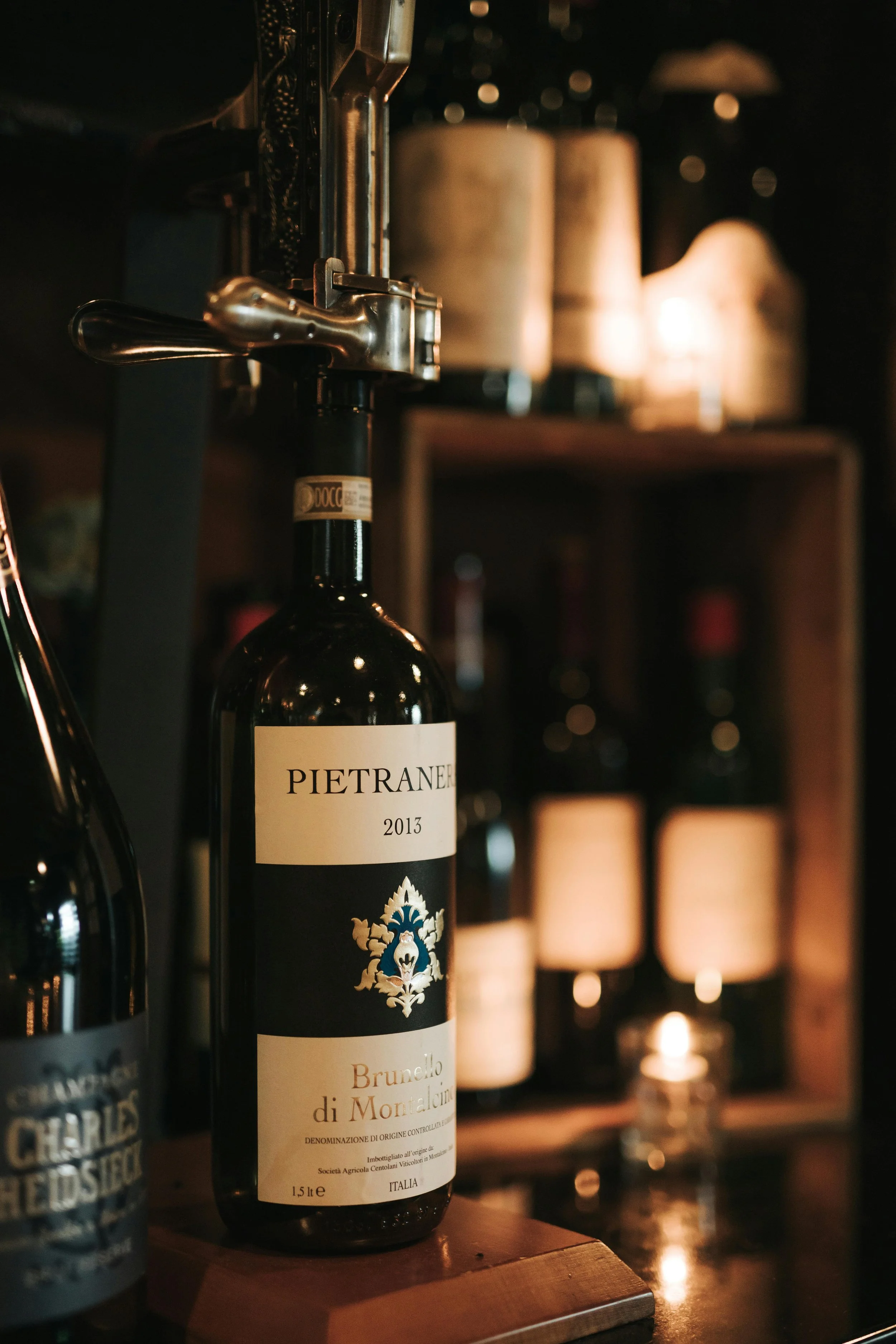
The bottle has been waiting since the year you were born.
A birth-year Brunello, opened just for tonight.
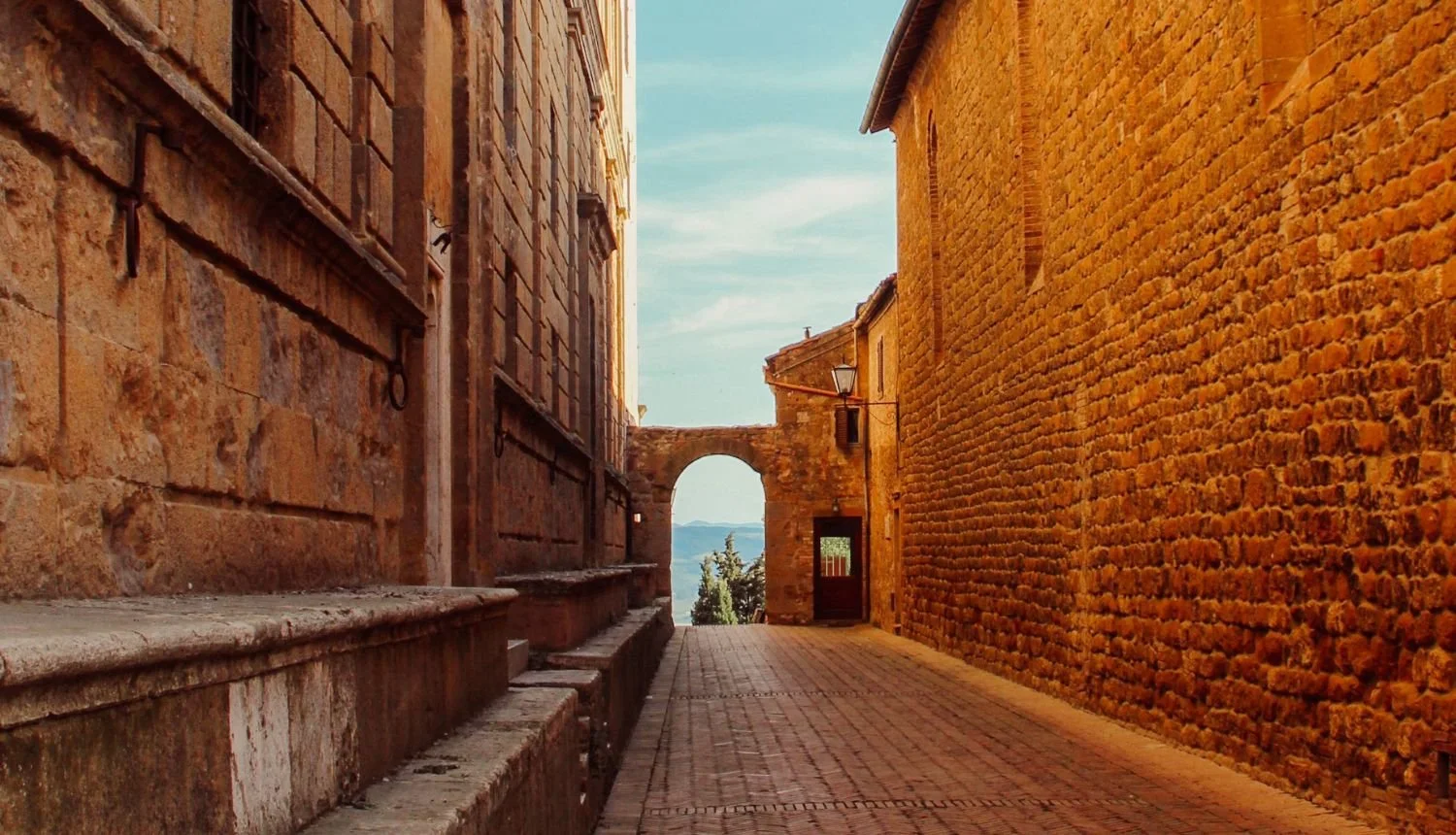
Woodsmoke reaches you before anything else. Not ambient, not decorative — actual oak smoke from a kitchen where cinghiale has been braising since before you arrived, rising through the stone streets of a hill town that has no interest in performing itself for you. You are 564 metres above a valley still holding October mist. Montalcino does not announce itself. It sits above its own vineyards with the composure of a place that has been producing extraordinary wine longer than most countries have existed, and it has never needed your approval.
The cellar master opened the birth-year bottle and poured without a word. That silence was the entire point of coming.
What Brunello di Montalcino Tastes Like After Harvest
Sangiovese Grosso — the grape the locals have always called Brunello — is not a subtle variety, and October in Montalcino makes no apologies for that. The harvest finished in the first week of the month in most years. The tractors are back in the sheds. The sorting tables have been hosed down. And now the cantinas are doing the quiet, consecrated work of deciding which barrels will carry the name and which will not. This is the moment a Tuscany wine trip to Montalcino becomes something other than tourism.
Estates like Biondi-Santi established the template across generations: long maceration, years in large Slavonian oak, a wine that requires patience from the producer and from the drinker. The modernist school — shorter extraction, French barriques, wines accessible earlier — produces its own argument. Both are worth the conversation. At the table, the cooking answers the wine. Pici al ragù d'anatra: the thick, hand-rolled pasta with duck ragù that clings like the landscape does. Pappardelle con cinghiale: wide ribbons with wild boar that has braised since Tuesday.
Order the Rosso di Montalcino before you commit to anything older. It is the same Sangiovese Grosso, younger, less armoured — and it tells you exactly what the Brunello is thinking.
The Cantinas Worth Your Time
Not every estate in Montalcino is worth visiting. These four make a case for the appellation that no single bottle purchased elsewhere can.
The family that invented the appellation in the 1870s. Their Riserva is among the most age-worthy red wines made in Italy. Visits require advance contact and are worth every effort to arrange. This is the historical argument for the entire appellation made in liquid form.
The Brunello that locals actually drink, at a price that makes it extraordinary value. Consistent across vintages in a way that marks serious winemaking. The Rosso di Montalcino is the entry point; the Brunello Riserva is the destination.
Wines that arrive on the market with a ten-year wait and reward every year of it. Biodynamic farming, minimal intervention, extraordinary longevity. If you find a bottle on a list, order it without reading the price.
The most welcoming estate for visitors without arranged introductions. The cellar tour is genuinely informative, the tasting generous, and the views from the terrace over the Val d'Orcia are the best argument for staying longer than planned.
How Montalcino Holds a Milestone Like Nowhere Else
There is a particular kind of dinner that only happens in places built for this. You are seated in a room where the stone walls have absorbed two hundred years of exactly this conversation. The cellar master arrives with three bottles wrapped in linen — one from the year you were born, one from the year you met, one from the year that changed everything between you. He does not offer tasting notes. He opens the first bottle, pours two glasses, and leaves you to it. That restraint is the point.
A Tuscany wine trip built around a birthday, an anniversary, or simply the decision that this particular year deserved marking finds its correct architecture in Montalcino. The town has four thousand residents. It cannot ignore you. The woman at the enoteca who poured your first glass remembers it the following evening. The restaurateur who seated you by the window on the first night moves you outside on the second because the fog has lifted and the valley is lit. You are not processed. You are present.
What Montalcino gives a couple celebrating something real is proportion: the world reduced to a hill, a dinner, a wine that was made in the year your relationship began and has been waiting in a cellar under tufa stone for exactly this use. The choreography of a larger, more famous destination — the performance, the theater, the manufactured moment — is absent. What remains is the actual thing.
Why a Tuscany Wine Trip Here Works Best After Harvest
September receives the attention. September is when the travel press arrives, when the photographs come out saturated and cinematic, when the agriturismi book their final rooms in August. October is when the serious thing happens. The harvest is complete by early October in most years, and what follows is a change in the cantinas that is difficult to convey to someone who hasn't experienced it. The urgency of picking is gone.
The winemakers are evaluating — tasting through barrels, making decisions they have been building toward all year — and they are willing to share that process with visitors who demonstrate that they understand what they're looking at. These are not public tastings with a branded glass and a scripted speech. They are conversations between people who care about the same thing, and they happen in October in a way that September — loud, crowded, performing the harvest for an audience — simply cannot produce.
The nebbia comes down from Monte Amiata in the early morning and sits between the vine rows in a way the photographs cannot reproduce. By ten it has burned off into a sky that is the specific blue of central Tuscany in autumn: high, clear, cold at its edges. The Florentine weekend tourists are back in their offices. The American groups following the harvest schedule have moved north to Barolo. What remains is the place operating at its own frequency — and the quality of attention available to you in that quiet is the real reason to be here at this time, and not any other.
Destination Intelligence
What we know
before you arrive.
Top cellars: 4–6 weeks.
Top tables: 30–60 days.
The estates worth visiting require advance contact and do not take walk-ins. Book cellar visits before you book the hotel. The dinner reservation at the restaurant worth going to requires the same logic — thirty days minimum, sixty during harvest in September and October.
Treating Montalcino
as a day trip from Siena.
You can drive from Siena to Montalcino in forty-five minutes. This does not mean you should. A day trip gets you the view and a glass at the enoteca. Two nights gets you the cellar, the dinner, the morning quiet, and the knowledge that this place operates at a frequency you can only access by sleeping inside it.
What couples ask
before they go.
October is the correct answer, and it is not a close decision. The harvest concludes in early October, the cantinas shift from production to evaluation, and the winemakers become genuinely accessible in a way that the harvest season's tourist pressure prevents. The cooking pivots to braised boar and hand-rolled pici with duck ragù — the dishes that pair correctly with aged Brunello. September photographs better. October delivers more.
Brunello di Montalcino is made exclusively from Sangiovese Grosso and requires a minimum of five years of aging before release — at least two of those in oak. It is not a wine for casual sipping alongside antipasti. It demands food built around it, not beside it.
Start with the Rosso di Montalcino — same grape, younger, less structured — and use it to calibrate your palate before you open anything with serious age. The Rosso tells you what the Brunello is thinking.
Scale. Montalcino is a town of four thousand people on a hill. It has no mechanism for anonymity. The restaurateurs learn your name on the first evening. The enoteca owner remembers what you ordered and why. The cellar master who opens your birth-year bottle is available for the same conversation the following night.
For a couple marking something significant, that proportion — a world reduced to a single hill, a specific dinner, a wine that has been waiting decades for this use — creates conditions for presence that no larger destination can manufacture.
The Montalcino you're imagining has a specific shape.
A cellar sequence, a birth-year bottle, the right evening in the right room. Our Tuscany & Piedmont destination guide builds the complete architecture. Itineraries are available at Toast, Savor, and Indulge. Yours starts here.
Start Your Itinerary See the Experiences →You'll choose Toast, Savor, or Indulge on your intake form.
Travel beautifully. Live unforgettably.