Beyond Florence: How to Extend Your Florence Trip into Tuscany
On why the city that seduces you first is only the overture — the countryside writes the rest of the score.
Florence does something to first-time visitors that it rarely does twice: it convinces them the trip is over. Three days of Brunelleschi's dome, Ponte Vecchio at dusk, and bistecca alla fiorentina eaten too fast, and most couples board a train home believing they've seen Tuscany. They haven't. The best day trips from Florence aren't day trips at all — they're the second half of a sentence the city deliberately leaves unfinished. Florence gives you density: art stacked on art, history compressed into a walkable grid. What it withholds is space — the kind of open, slow, vineyard-laced quiet that lets a relationship breathe instead of just sightsee. The argument here is simple: Florence is the setup. Chianti, Val d'Orcia, and Montalcino are the payoff, and skipping them is the most common, most forgivable, most fixable mistake we see couples make.
Florence gives you density: art stacked on art, history compressed into a walkable grid. What it withholds is space — the kind of open, slow, vineyard-laced quiet that lets a relationship breathe instead of just sightsee.
Florence Is the Departure Point, Not the Destination
Florence earns its reputation honestly. The Uffizi, the Duomo, the leather workshops tucked behind Santo Spirito — three nights here is not wasted time, it's the necessary overture. But Florence is a city built for looking, not for settling in. Every meal is good and slightly rushed. Every view is framed by a building. The Arno is beautiful and you will cross it eleven times without once feeling like you've stopped moving.
That restlessness is the point. Florence is engineered — by geography, by tourism volume, by its own density — to push you outward. The hill towns visible from the Piazzale Michelangelo aren't a coincidence; they're the city's own argument for what comes next. This is why the best day trips from Florence are less a checklist and more a release valve: thirty to ninety minutes outside the walls, the landscape opens, the pace drops, and the trip stops being a series of museum queues and starts being a relationship.
The logistical case is just as strong as the emotional one. A rental car or a private driver from Florence puts Chianti within forty minutes, Val d'Orcia within ninety, Montalcino within two hours. None of this requires sacrificing the city — it requires sequencing it correctly, anchoring three or four nights in Florence before the countryside takes over. Couples who skip this step tend to leave Tuscany having seen only its most photographed room. For a fuller sense of how these regions connect — and where Piedmont fits into a longer Italian arc — our Tuscany & Piedmont destination guide maps the full architecture.
Florence, in other words, is not where this trip ends. It's where it earns the right to slow down.
The Three Extensions
Chianti: The Slow Restart
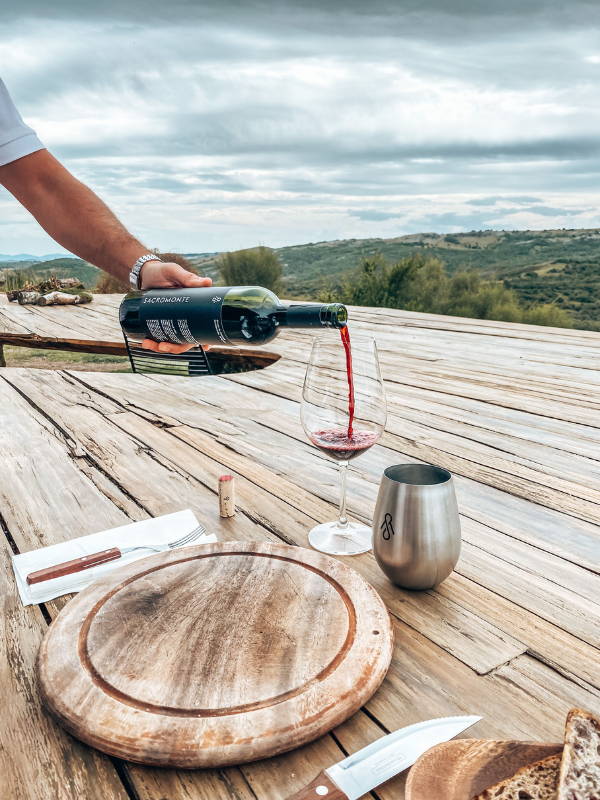
Chianti is the correct first move, not because it's closest, but because it's the gentlest decompression from a city that never stops moving. This is Chianti Italy at its most legible: terraced vineyards, gravel roads that go nowhere in particular, and a silence that has nothing to do with isolation and everything to do with scale. Base yourself at a working agriturismo — somewhere like Castello di Ama for art-meets-wine or a smaller Greve-in-Chianti property where dinner is whatever came out of the garden that morning — and let the schedule collapse. The detail that earns this stop: a glass of Chianti Classico poured straight from a steel tank, still slightly warm from the afternoon, tasted before the wine has been dressed up for export. Two nights is the floor here. One night reads as a layover; two lets the body actually slow to the region's pace. If you're weighing Chianti against a coastal add-on instead, our Tuscany & Piedmont destination guide breaks down how the two regions compare for pacing and food.
Pacing: 2 nights, spring through early fall; anchor on one long vineyard lunch, not a touring itinerary.
Val d'Orcia: Thermal Water and Brunello
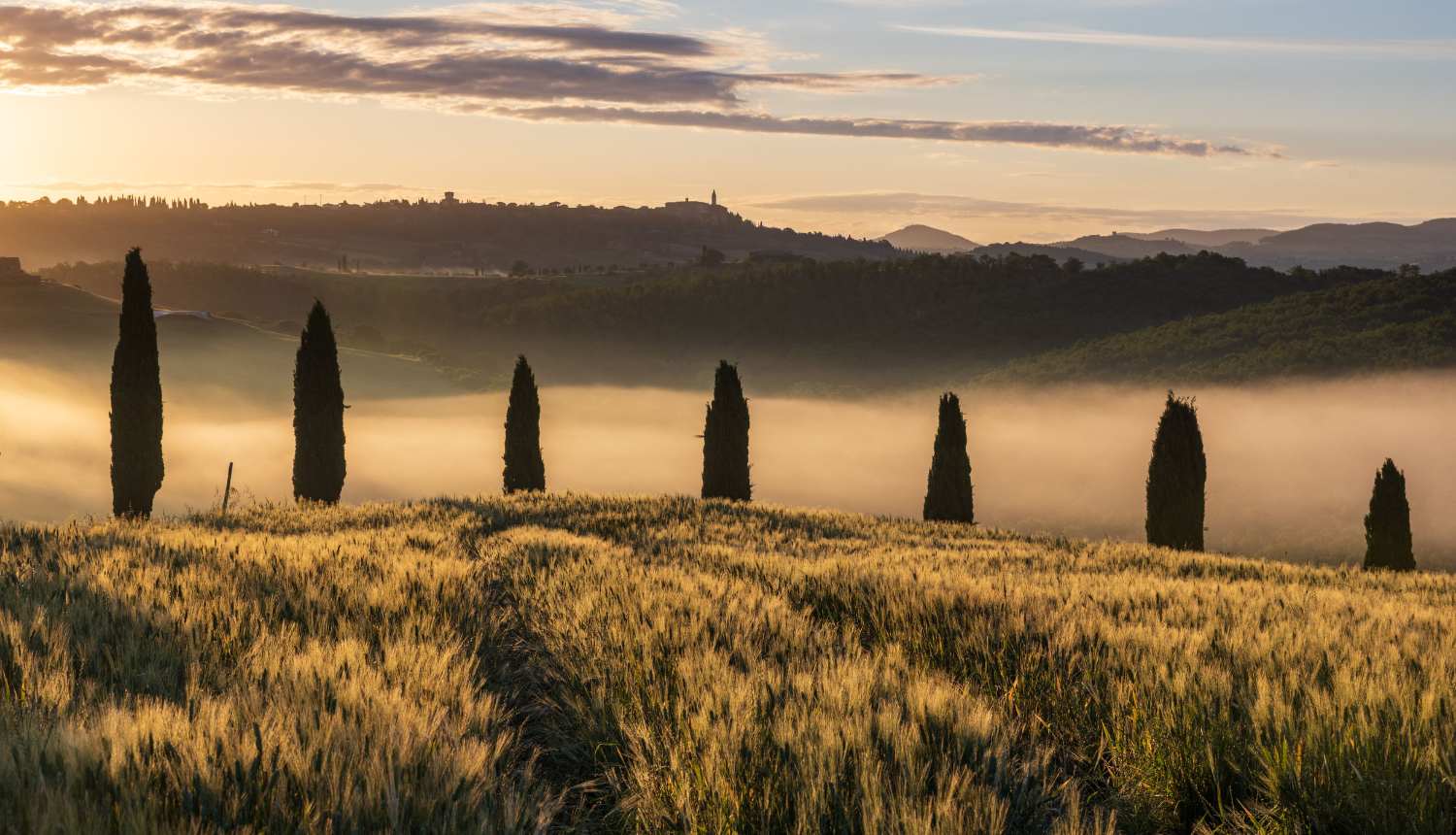
Val d'Orcia earns its UNESCO status on sightlines alone — the cypress-lined road to Pienza, the abbey at Sant'Antimo glowing at dusk — but the real argument for choosing it over a third Chianti town is the water. Bagno Vignoni's thermal pools, fed by the same geothermal system as the rest of southern Tuscany, give the trip a physical reset that no vineyard tour provides. Pair a soak with a Brunello tasting in Montepulciano or a pecorino-and-honey lunch in Pienza, and the day stops being an itinerary and starts being a rhythm. The detail worth building a day around: pecorino aged in walnut leaves, served with chestnut honey, eaten outdoors while the light goes copper over the valley. Skip the public Piscina Val di Sole pools at midday — the crowds undercut the entire point of slowing down, and a same-property soak at sunset delivers double the effect. Plan one night minimum, two if the thermal stop is the priority rather than a pause.
Pacing: 1–2 nights, year-round (thermal pools work in any season); anchor on one slow lunch and one soak, not both towns in a single day.
Montalcino: The Brunello Day
Montalcino doesn't need an overnight to justify itself — it needs one unhurried day, ideally timed to a single producer visit rather than a tasting-room crawl. The case for it: this is where Brunello di Montalcino is made, not just sold, and the difference shows in towns built around cellars rather than gift shops. Visit a smaller estate like Podere Le Ripi or Canalicchio di Sopra over a flagship name — the pours are more honest and the conversation actually happens. The sensory detail that justifies the drive: cinghiale ragu over pici, eaten at a trattoria table that's been in the same family for three generations, paired with a Rosso di Montalcino instead of the pricier Brunello. Pair the visit with a stop in Sant'Angelo in Colle for the view alone — it's the kind of overlook that makes the case for the drive before you've tasted a single glass. Treat this as a day trip from a Val d'Orcia base, not a fourth overnight stop — the region rewards a focused afternoon more than a rushed extra night.
Pacing: Day trip only, from a Val d'Orcia base; anchor on one producer tour booked in advance, not a self-drive tasting circuit.
How to Build the 3+2 (or 4+3)
There are two reliable structures for this trip, and the right one depends on how much countryside you actually want.
The 3+2 structure — three nights Florence, two nights Chianti — is the default for couples on a seven-night window who still want a full city experience. It front-loads the museums and architecture, then lets the back half of the trip exhale completely. Anchor the Chianti leg on one agriturismo, one long lunch, and nothing else scheduled.
The 4+3 structure — four nights Florence, three nights split between Val d'Orcia and Montalcino — suits couples who consider the countryside the actual point and the city the preamble. This version trades a museum day for a thermal soak and a producer visit, and it rewards travelers willing to drive themselves rather than rely on group tours.
The mistake we see most often: couples try to do all three extensions as day trips from a single Florence hotel room, treating Chianti, Val d'Orcia, and Montalcino as a checklist rather than a sequence. The driving alone — ninety minutes each way to Val d'Orcia, repeated three times — erases the exact slowness the countryside was supposed to provide. The fix is simple: move your base. Spend the countryside nights in the countryside, not in a Florence hotel with a rental car parked outside it.
If Montalcino earns more than a single afternoon on your itinerary, our Tuscany wine trip guide to Montalcino goes deeper on producers, pacing, and which Brunello years are worth the cellar visit.
What to know before you go.
Chianti, Val d'Orcia, and Montalcino cover the three pacing notes a Florence-based countryside trip needs: vineyard slowness, thermal reset, and a focused wine day. Chianti suits a first extension because it's closest and gentlest; Val d'Orcia adds physical decompression through Bagno Vignoni's thermal water; Montalcino works best as a single unhurried day rather than its own overnight. Together they turn a city-only trip into a complete arc, rather than three disconnected excursions.
One night in Chianti Italy is enough to feel the shift but not enough to fully exhale — treat it as a sampler rather than the main event. Base yourself at a single agriturismo, skip the town-hopping, and build the evening around one long dinner sourced from the property's own garden. If your schedule allows a second night in Chianti Italy, take it; one night reads as a layover, two as an arrival.
A car gives you the most freedom, especially for Val d'Orcia's smaller roads, but a private driver works well if neither of you wants to navigate Italian signage on vacation. Book agriturismi and Brunello producer visits four to six weeks ahead in peak season (May–June, September–October); thermal pool slots at Bagno Vignoni rarely need advance booking. Avoid renting a car only for the Florence days — you won't need one in the city itself.
The Sequence Is the Service
The sequencing above is the logic behind every Tuscany itinerary we build — which nights belong to the city, which belong to the countryside, and where the driving actually disrupts the pace instead of serving it. Whether you're working with our Toast, Savor, or Indulge tier, the architecture stays the same: Florence sets up the trip, Chianti and its neighbors complete it. Explore the full regional logic in our Tuscany & Piedmont destination guide, or let us build the sequence for you.
Start Your Itinerary See the Experiences →You'll choose Toast, Savor, or Indulge on your intake form.