Beyond Naples: Amalfi Positano & What Surrounds Southern Italy's Gateway
On why Naples is the departure lounge, and the coast below it is the actual arrival.
Search the best day trips from Naples Italy and you will be handed the same four bullet points: Pompeii, Capri, Herculaneum, Vesuvius. All defensible. None of them answer the question you are actually asking, which is how many nights to give this trip and in what order. Naples is not a city you tour and tick. It is a staging ground — loud, unsentimental, the best pizza on earth — and the country it stages runs south from Sorrento to Salerno on seventy kilometres of cliff road. The mistake is treating that coastline as an excursion. It is not. It is the second half of the trip, and it changes the pacing of everything that comes before it. What Naples gives you is appetite. What the coast gives you is the room to sit with it.
Naples is not a city you tour and tick. It is a staging ground — loud, unsentimental, the best pizza on earth — and the country it stages runs south from Sorrento to Salerno.
Naples gives you appetite. It will not give you quiet.
Naples has a very short list of things it does better than anywhere on earth, and it does all of them loudly. Pizza first — the margherita at Da Michele if you want the argument settled, or the puffed, blistered canotto at Concettina ai Tre Santi up in the Sanità, where the crust rises like a life raft. Sfogliatella riccia at Pintauro on Via Toledo, eaten standing on the pavement, still hot enough to burn the roof of your mouth. The Veiled Christ at Cappella Sansevero, four minutes from three pizzerias and worth rearranging a morning for. The MANN, if the mosaics interest you more than the rubble they were lifted from.
What Naples withholds is silence. There is no long lunch here that ends in nothing, no terrace where the afternoon simply stops. The city runs at a pitch that is thrilling for two days and depleting by the third. That is not a flaw in the city. It is the argument for leaving it.
It is also why most lists of the best day trips from Naples Italy get the structure wrong. Pompeii and Vesuvius genuinely are day trips — out by nine, back by six, and you have not lost the thread of anything. The coast is not. The moment you commit to the SS163 or the hydrofoil, you have committed to a change of tempo, and tempo does not reverse in an afternoon. Give it nights or give it nothing.
The logistics make the case for you. Capodichino sits twenty minutes from Molo Beverello, where the fast ferries leave. Napoli Centrale puts you an hour from Rome. Everything about this city is engineered for arrival and departure. Use it that way: two nights, eat hard, then go south. Our Amalfi Coast destination guide maps what waits at the other end.

Three directions south, and the honest case for each
Positano — for the couples who want the coast at full volume
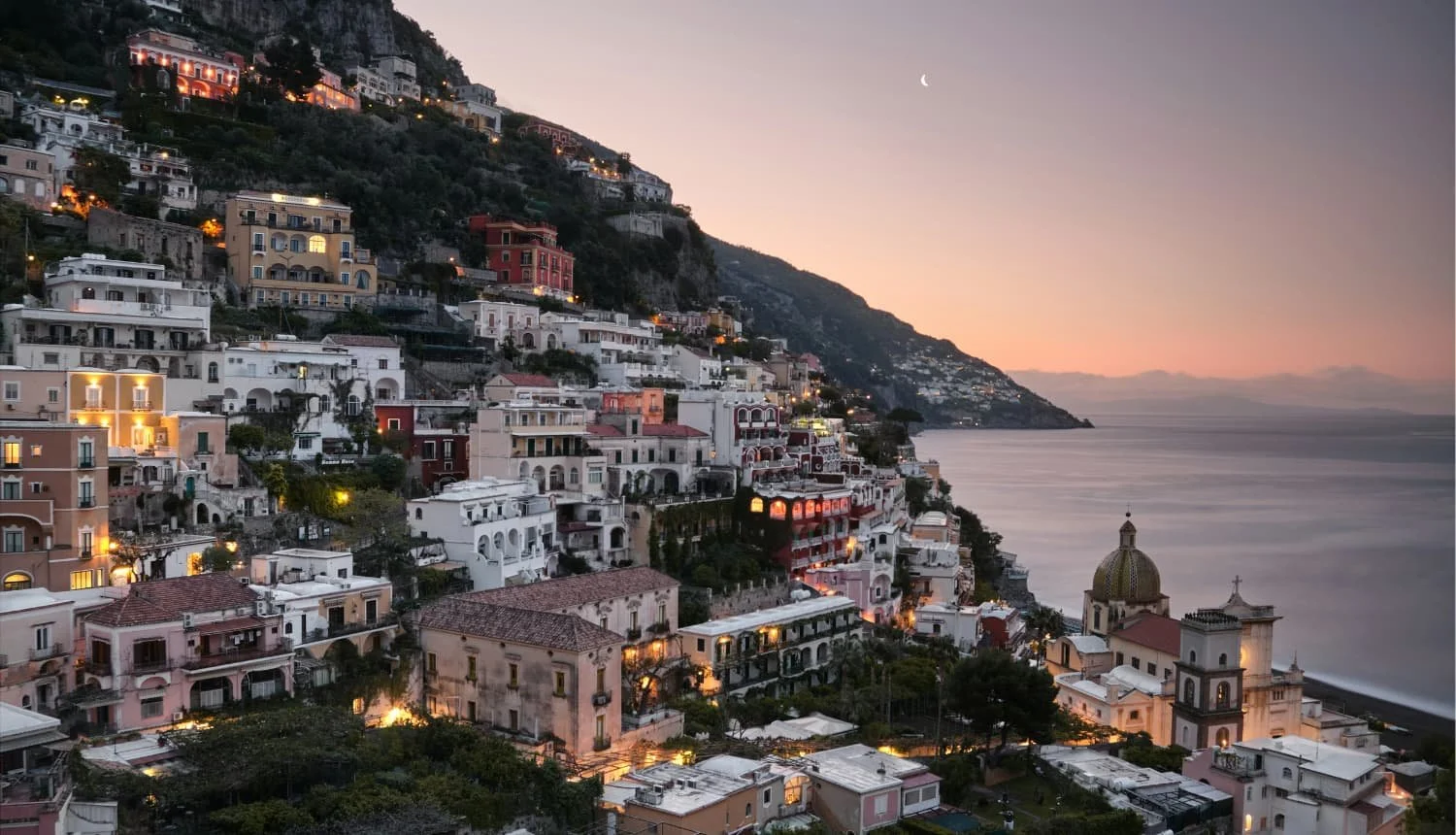
Choose Positano if you want this coastline at its most theatrical and you are willing to pay for the angle. The town is a vertical stack of pink and ochre houses falling toward one grey beach, and there is no casual version of it — you will climb, you will sweat, and then someone will hand you a spritz on the terrace at Franco's Bar at Le Sirenuse and you will stop objecting. Dinner is the reason to be here. La Sponda lights roughly four hundred candles by hand every evening, and the room glows in a way no lighting designer has ever managed to fake. For something less ceremonial, Da Vincenzo on Viale Pasitea has kept the same octopus and potato dish on the menu for decades because removing it would cause a civic incident. Anchor your days on water rather than sand: hire a gozzo and run down to Marina del Cantone for spaghetti alla Nerano at Lo Scoglio, which is the best lunch on this coast and not a close contest.
Pacing: Three nights. Late May to mid June, or the second half of September. Book La Sponda when you book the flights, not after.
Amalfi and Atrani — for the couples who would rather walk than climb
Amalfi is the choice for people who want to move on foot without a stairmaster. It is a working town with a cathedral reached by sixty-two steps, a paper museum in the gorge behind it, and a piazza where locals actually sit down. It is also the practical hub of the coast: the ferry from Naples to Amalfi runs roughly April through October out of Molo Beverello, lands you at the harbour in around two hours with a Positano stop on the way, and delivers the coastline as it was meant to be met — from the water, arriving. Eat at A' Paranza in Atrani, ten minutes on foot around the headland, where the fritto misto and the raw red prawns beat anything at three times the price on the Positano waterfront. Walk back and order a delizia al limone at Pasticceria Pansa, on the piazza since 1830 — sponge, lemon cream, a cold pale dome of it eaten standing up. Our Amalfi Coast destination guide covers the walking routes linking the two towns.
Pacing: Two to three nights. Shoulder season only — August turns the seafront into a slow-moving queue with a view.
Ravello — Amalfi's upstairs, and the quietest room on the coast
Ravello is not a third direction so much as Amalfi's upper floor: twenty minutes and a thousand feet above the water, where you go once you have had enough of the coast road and would rather look down on it. Villa Cimbrone's Terrace of Infinity, reached through a garden that smells of clipped box and warm stone, is best at opening — the marble busts, the drop, the haze, nothing else. Villa Rufolo stages the Ravello Festival each summer on a platform cantilevered over the cliff, which is the most romantic concert setting in Italy. Dinner at Rossellinis at Palazzo Avino if you want the tasting menu and the terrace; a bottle and a plate of cheese at Babel if you want the town instead. This is the extension that changes the emotional register of the trip: after the noise of Naples and the theatre of Positano, Ravello is where the two of you finally hear each other.
Pacing: Two nights, or one long half-day from Amalfi. July for the festival, September for the quiet.
How to build it: nights, order, and the road you take home
Structure beats coverage on this route. Two shapes work.
Seven nights — 2 nights Naples, 3 nights Positano, 2 nights Ravello. Naples first, always. You want the noise while you still have the energy for it, and you want the coast to be the exhale rather than the warm-up.
Nine nights — 3 nights Naples with a Pompeii morning, 4 nights Amalfi, 2 nights Ravello. This is the version for couples who walk, and it leaves room for the Path of the Gods from Bomerano down to Nocelle without writing off a day.
The named mistake: the same-day arrival. Couples land at Capodichino at midday and try to reach Positano that evening. The transfer takes ninety minutes on a clear road and three hours behind a coach on the SS163, the ferries do not run after dark, and you arrive at a hotel with sixty steps and no lift, at night, hungry, arguing about luggage. Give Naples the first night. Every time.
Ferry versus road is not a cost question, it is an experience question. Take the hydrofoil south: the coast unfolds in the correct order, the towns rise out of the water the way they were built to, and you skip the switchbacks entirely. Take a car or a private driver north on the way home, early, when the road is empty and the light comes off the sea on your right. Do not drive the SS163 for the first time at five on a July Saturday.
One last rule. Move hotels twice at most. A third move costs you an afternoon of packing, check-in and unpacking, and buys you nothing you could not have reached by boat before lunch.
What to know before you go.
Pompeii, without hesitation — under an hour on the Circumvesuviana, back by mid-afternoon, and the only major ruin that survives a compressed visit because the streets do most of the work. Herculaneum is smaller, better preserved and half the walking if the heat is punishing. Capri and the Amalfi Coast technically fit inside a day and should never be attempted as one. Both need nights to make any sense at all.
In season, yes. The ferry from Naples to Amalfi runs roughly April through October from Molo Beverello, takes about two hours with a Positano stop, and costs a fraction of a private transfer. It also arrives the right way — from the water, with the town climbing in front of you rather than appearing sideways through a windscreen. Outside those months the service stops entirely and you are on the SS163 by car or SITA bus.
Six to nine months for May, June and September. The sea-view rooms and the tables at La Sponda and Rossellinis go first and do not come back. Ferry tickets need only a few days, though the summer timetable is not published until spring. If you want a private boat day, book the skipper before the hotel — there are far fewer of them than there are rooms.
The coast is the second half. We sequence the whole thing.
The sequencing above is the logic we apply to every Southern Italy trip: Naples for appetite, the coast for the pause, and nights allocated only to the places that genuinely need them. Our Toast, Savor and Indulge tiers all begin from the same three questions — how many nights, in what order, and which tables are held — then scale from a structured outline to a fully booked itinerary with the boat, the drivers and the reservations confirmed. Start with our Amalfi Coast destination guide, then send us your dates.
Start Your Itinerary See the Experiences →You'll choose Toast, Savor, or Indulge on your intake form.